
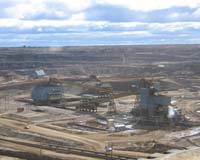
The premier of oil-rich Alberta scorned former US presidential candidate Al Gore over his scathing sketch of its massive oil sands industry as wasteful and a blight on Canada, said reports Wednesday.
Gore said in the current issue of Rolling Stone magazine that processing Alberta's bitumen into crude oil requires almost as much energy as is produced and causes huge environmental damage.
"For every barrel of oil they extract there, they have to use enough natural gas to heat a family's home for four days," Gore told the magazine.
"And they have to tear up four tonnes of landscape, all for one barrel of oil. It is truly nuts. But you know, junkies find veins in their toes. It seems reasonable, to them, because they've lost sight of the rest of their lives."
His solution is to break America's addiction to oil.
Klein, who was in Washington last week to promote Canada's oil sands as a secure and reliable source of energy, rejected the critisms as fanciful.
"I don't know what he proposes the world run on, maybe hot air," Klein told reporters. "The simple fact is America needs oil."
Canada's oil sands at an estimated 179 billion barrels rank second behind Saudi Arabia in petroleum resources, but due to high extraction costs, the deposits were long neglected, except by local companies.
While conventional crude oil is pumped from the ground, oil sands must be mined and bitumen separated from the sand and water.
Since 2000, skyrocketing crude oil prices and improved extraction methods have made it more economical to exploit the sands and lured several international oil companies.
More than 22 billion US dollars have been invested in the past four years in various oil sands projects.
The Organisation for Economic Co-operation and Development said in its annual report last month Canada's oil sands production is expected to continue climbing to 3.5 million barrels per day by 2015.
But Alberta's booming economy has also led to wide disparities in provincial finances because of its lucrative energy royalties and caused a "damping effect" on other sectors, particularly manufacturing in Ontario, the economic watchdog warned.
