
Last week the industry consortium, Dii (DESERTEC industrial initiative), invited attendees to Barcelona for its first annual meeting on the DESERTEC desert power project.
Top of the agenda were current developments in the plan created by DLR for the future supply to Europe of solar power from North Africa and the Middle East. But what projects are bringing us closer to this vision of future energy supply?
DESERTEC idea gains support in industry and politics
Without doubt, support for the desert power concept is on the increase. New members are regularly joining the industry consortium Dii, and the French parallel initiative, Transgreen, is also consolidating new partners.
From mid-November, Transgreen will concentrate on the design of the power networks in North Africa, the Middle East and Southern Europe, working under the name of MEDGRID. Dii and MEDGRID's objectives will be identical and so instead of working in competition, they will want to work together on the assigned tasks.
The desert power vision has political backing from Berlin and even more so from Brussels. Energy Commissioner Gunther Oettinger wants to expedite the deregulation of the energy market, with plans to propose to the European Energy Minister Council a single feed-in tariff for solar power from the MENA (Middle East North Africa) states.
Momentum in North Africa and the Middle East
Like the momentum in Europe, interest in renewable energy supplies in North Africa is also growing. Most countries between Morocco and Jordan get over 90 percent of their current power from fossil-fuelled power stations.
Rising oil, gas and coal prices make investing in solar power stations and wind farms more appealing from an economic perspective. With the support of the World Bank and the African and European Investment Banks, projects to develop power plants that will output several hundred megawatts of power by the year 2020 are now taking shape.
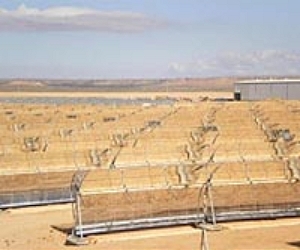
Solar-thermal power plants are also planned, as are extensive wind farms – particularly in Morocco, Tunisia, Egypt and Jordan.
Dii wants to smooth the way
By 2012 the consortium will present a final plan, which potential investors can also use to initiate their financially sustainable projects.
To avoid excessively high expectations, Dii representatives reiterated at the annual meeting that they themselves will not be building any power plants.
They see their task as laying the groundwork for the desert power project in the MENA states as well as in Europe. And so it could be years before the first kilowatt-hour of solar power finds its way to Europe – with plenty more debates to come about power security, benefits for the MENA states and economics.
Share This Article With Planet Earth
