
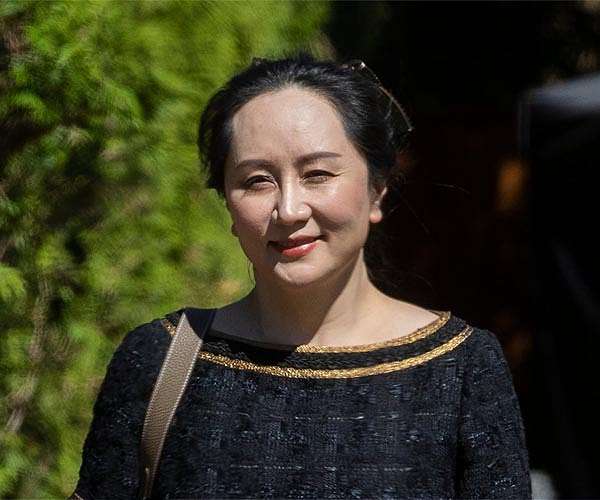
Lawyers for detained Huawei executive Meng Wanzhou have accused Canadian police of trying to "cover up" the illegal sharing of data from her electronic devices with the FBI ahead of her high-profile arrest in Vancouver.
Meng, chief financial officer of the Chinese tech giant, has been fighting extradition from Canada to the US, where she faces fraud and conspiracy charges related to alleged violations by Huawei of American sanctions on Iran.
Her defense on Thursday said the Royal Canadian Mounted Police shared her electronic device information with US authorities, alleging the Canadians and Americans conspired to breach her rights and violate Canada's Extradition Act.
The 48-year-old daughter of Huawei's billionaire founder Ren Zhengfei was held on a US warrant during a Vancouver stopover in December 2018, a detention that Beijing says is politically motivated.
Days later, Beijing arrested Canadians Michael Kovrig and Michael Spavor, in what Ottawa has insisted was a retaliatory move.
Alongside the charges of aiding Iran in breach of sanctions, the administration of US president Donald Trump has railed against Huawei over fears that adoption of its 5G technology could pose a spying risk.
Sergeant Janice Vander Graaf, who oversaw Meng's arresting officers, denied the cover up accusation, saying a review of emails had left her confident that Meng's information was not sent to the FBI, despite previously writing in her notes that a colleague said it had been.
That officer, Constable Gurvinder Dhaliwal, has since testified that he did not tell Graaf the information had been sent. The accused sender, RCMP Staff Sergeant Ben Chang, has denied the allegation but refused to testify.
Graaf said her memory of events had changed since she swore an affidavit last year.
"You are trying to cover up for Constable Dhaliwal and Staff Sergeant Chang in relation to this issue," Meng's defence lawyer Scott Fenton said in the Supreme Court of British Columbia.
"I suggest… you tailored your evidence to suit what you think protects the RCMP in this issue."
Canadian prime minister Justin Trudeau earlier this month held firm that Canada would not bow to pressure to release Meng following fresh anger from Beijing.
He has also raised the case of the two detained Canadians with US President-elect Joe Biden.
Meng's extradition hearing is expected to wrap up in April 2021.
Canadian police officer testifies at Huawei exec's extradition hearing
Vancouver (AFP) Nov 26, 2020 –
An attorney for Huawei executive Meng Wanzhou said Wednesday that a Canadian police officer "deceived" his client during her arrest in 2018 so that she would not call a lawyer.
Meng, chief financial officer of the Chinese telecom giant, was arrested on December 1, 2018 at the Vancouver airport by Canadian authorities acting on a US warrant.
For two years she has been fighting extradition to the United States, where she faces fraud charges related to the company's activities in Iran in breach of US sanctions.
Her lawyers have tried to derail the extradition procedure by arguing that Meng's rights were violated during her arrest, which Canada denies. This month's hearings have heard from police and customs officers involved in her arrest.
The defense have said that the daughter of the Huawei founder was interrogated for three hours without her lawyer and without being told why, and had to give the passwords to her electronic devices to customs officials, who passed them on to Canadian federal police.
Police then sent them to US Federal Bureau of Investigation agents, according to the defense, which denounced "collusion" between the two bodies.
On Wednesday, lawyer Scott Fenton accused a Royal Canadian Mounted Police (RCMP) official of asking four customs officers not to reveal to Meng that she was the subject of an arrest warrant and thus misled her about her rights.
Janice Vander Graaf, an RCMP sergeant and the most senior police officer called to the bar in the almost two-year-long judicial saga, dismissed the charges.
"No, I have no recollection of that happening and I do not believe that happened," she testified.
"You were concerned that if the (customs officials) told her about the indictment or the provisional arrest warrant, she might seek counsel" and refuse to answer questions, Fenton continued.
The policewoman replied that she never gave any instructions to the customs officers, except to seize Meng's electronic devices and put them in frequency-locking bags at the FBI's request.
"We weren't asking for any information," she said, adding: "We don't need passwords to get into phones."
The arrest of Meng, followed a few days later by the detention in China of two Canadians accused of espionage, provoked a serious diplomatic crisis between Beijing and Ottawa.
