
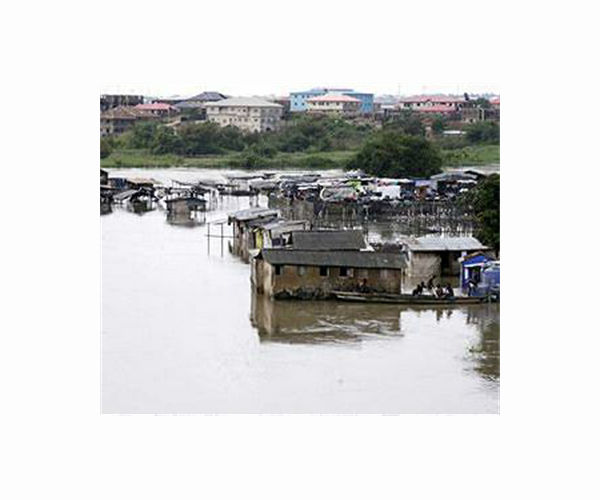
Half a million Nigerians have been affected by floods caused by heavy rains since the start of the year, President Muhammadu Buhari said on Tuesday.
Twenty-three of Africa's most populous country's 36 states are affected by seasonal flooding, with northeastern states particularly hard-hit this year.
Buhari's office said emergency services were providing aid and he was receiving regular updates on the floods, which have affected more than 500,000 Nigerians since January this year.
"The destructive floods have displaced 73,379 people," caused more than 100 casualties, and injured about another 270 people, Buhari said in a statement.
In Maiduguri, the regional capital of northeast Borno State, the epicentre of the country's more than decade-long jihadist insurgency, people displaced by the conflict have seen their farms and homes destroyed by flooding.
"For the past 20 years, we haven't experienced such heavy floods. But this year, they have destroyed our farms, our homes and even taken the lives of some of us," Maiduguri resident Auwal Abale told AFP.
"Yesterday we found a corpse floating on the water surface."
Nigeria's grinding 13-year jihadist war in the northeast has killed more than 40,000 and displaced more than two million from their homes, mostly in Borno State.
Flooding is common in many parts of Nigeria during the rainy season which runs from May to September.
A decade ago, Nigeria suffered disastrous floods across most of its states, leaving hundreds dead and more than two million homeless.
75 dead in worsening Niger floods
Niamey (AFP) Aug 30, 2022 –
Powerful rains that have swept the arid state of Niger since June have left 75 dead and affected 108,000 people, the government said on Tuesday.
The previous toll issued by the Civil Protection Agency on August 14 was 32 dead and nearly 67,000 affected.
The worst-hit regions are Maradi in the central south, Zinder in the central east, and Tillaberi and Tahoua in the west.
The landlocked Sahel state's annual rainy season typically runs between June and August or September.
But in recent years, rainfall has become more intensive, accelerating the risk of deadly flooding in shantytowns.
More rain is forecast for the coming weeks, and the Niger Basin Authority has issued a warning for the capital Niamey, through which the Niger River flows.
Floods last year claimed more than 70 lives and affected more than 200,000 people. According to UN estimates, at least 350,000 could be affected this year.
The floods have combined with regional droughts and jihadist insurgencies that have badly hit harvests.
More than 4.4 million Nigeriens — around one in five of the population — suffer from "severe" food insecurity, according to health monitors.
