
The drilling crew on the Chicxulub Scientific Drilling Project near Merida, Yucatan, Mexico, has been doing "a fantastic job," last week recovering between 35 and 40 meters of exceptional core samples each day, according to a University of Arizona scientist and co-investigator on the project.
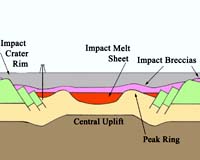
The Chicxulub Scientific Drilling Project (CSDP) is an international project to core 1.8-kilometers into an immense crater created by the impact of an asteroid or comet 65 million years ago. The Cretaceous-Tertiary (K/T) impact is thought to have led to one of the greatest mass extinctions in Earth history, including dinosaur extinction.
Universidad Nacional Autonoma de Mexico (UNAM) is the lead institution on the $1.5 million, approximately 2-month project. The goal is to discover what the impactor was and the details of the catastrophic impact that wiped out more than 75 percent of all plant and animal species on Earth.
