
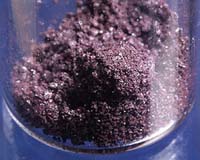
Two German tourists suffered burns on a Latvian beach after picking up pieces of phosphorus that they thought were amber, hospital officials said Friday. "A German burned his fingers with phosphorus, while a woman got burns on her thigh on Thursday," on Bernati beach, close to the southwestern port town of Liepaja, said Indra Grase, a spokeswoman for Liepaja central hospital.
The pair were released after treatment.
Accidents involving phosphorus happen each year in Latvia. Last year a Belgian citizen sustained serious burns on 12 percent of his body from the substance.
Phosphorus is highly flammable when it comes into contact with air. When it is warmed, for example by being picked up, it can flare up and reach a temperature of 900 degrees Celsius (1,650 degrees Fahrenheit).
The substance can look like amber, a fossilized resin which is common in the Baltic Sea region and which is used to make jewellry.
"We have placed warning signs everywhere on beaches in the Latvian, Russian and English languages, but incidents still happen," Leonids Zelenskis, head of Liepaja regional environment office, told AFP.
Zelenskis said phosphorus got into the Baltic sea off Latvia after a Soviet army officer ordered a three-tonne bomb filled with the substance to be blown up at a firing ground close to Liepaja in 1989.
"It's totally unpredictable when phosphorus could be washed ashore again or where," Zelenskis said.
"Carelessness about nature, which was typical of the Soviet army, can cause environmental problems for a very long time," he added.
Latvia, formerly part of the Soviet Union, regained its independence from Moscow in 1991. The Russian army left the Baltic state in 1994.
