
A Hong Kong lawyer said at her trial Monday that she was inspired by China's "tank man" to challenge the authorities and encourage people to mark the anniversary of Beijing's deadly Tiananmen Square crackdown.
Chow Hang-tung, 36, was charged with "inciting others to knowingly join an unauthorised assembly" over her social media posts calling on Hong Kongers to mark the June 4 anniversary this year after it was banned.
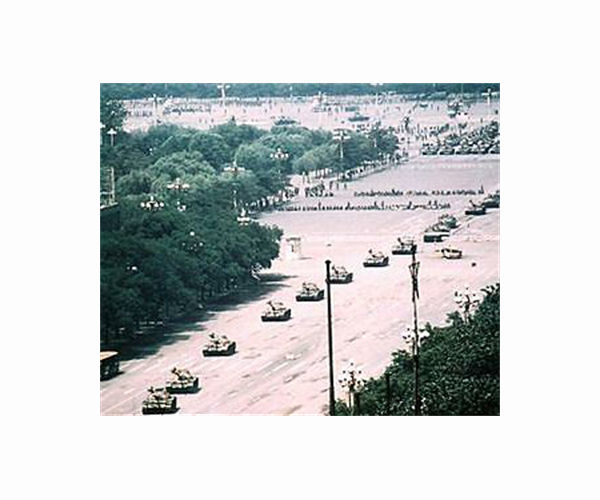
She has pleaded not guilty, and gave an impassioned defence on Monday in which she invoked "tank man" — the lone protester famously seen blocking a column of tanks during the Tiananmen crackdown.
Chow, a barrister who is representing herself at trial, said she understood the risk of personally defying the police ban and the fact that it was unlikely many would follow her call.
"But even when I was the only one left, I would go for it," she said.
"Just like the 'tank man' in 1989 — he did not go and try to stop the long row of tanks because he saw millions of people following him. He must do that even when he was on his own because it was the right thing to do."
The images and footage of "tank man" — whose identity and fate remain unknown — became a defining symbol of individual defiance against an authoritarian state.
– 'Flowers blossoming across the territory' –
Chow was a former vice chairwoman of the now-disbanded Hong Kong Alliance, the group that until recently organised huge candlelight vigils in Hong Kong every June 4.
For decades, Hong Kong was the one place in China where such mass commemoration was still permitted. It has been banned the last two years with authorities citing both the coronavirus pandemic and their ongoing crackdown on dissent.
During this year's anniversary, police sealed off the park where the vigil usually takes place as hundreds of Hong Kongers in nearby streets flashed mobile phone lights instead.
The Hong Kong Alliance has since been declared subversive. Its museum was raided, and much of its leadership was arrested under a national security law Beijing imposed last year.
The prosecution has alleged that Chow called on others to join the banned vigil through two articles she wrote on her Facebook page, and in local Chinese newspaper Ming Pao.
In those articles, Chow asked Hong Kong people to light a candle on June 4 wherever they felt safe, "like flowers blossoming across the territory".
She also vowed to go to the park on her own but was arrested the day of the anniversary.
Chow has also been charged with inciting subversion, a national security crime that carries up to ten years in prison and is the subject of a separate prosecution.
Amnesty to shutter Hong Kong offices, blames security law
Hong Kong (AFP) Oct 25, 2021 –
Amnesty International said Monday it will shutter its Hong Kong offices because of the threat posed to staff by a national security law that has fronted a sweeping crackdown on dissent in the business hub.
The decision came the same day a court in the Chinese city convicted a former food delivery driver of inciting secession by shouting slogans in the second national security case to come to trial.
China imposed the law last year in response to massive and often violent democracy protests, transforming Hong Kong's political, cultural and legal landscape and introducing mainland-style speech curbs.
Anjhula Mya Singh Bais, chair of Amnesty's board, said the decision to close had been made "with a heavy heart" and was "driven by Hong Kong's national security law".
"(It) has made it effectively impossible for human rights organisations in Hong Kong to work freely and without fear of serious reprisals from the government," she added.
The decision ends more than four decades of the international human rights group's presence in the city.
Amnesty maintains two offices in Hong Kong.
The first is a local branch that focuses on human rights and campaigns in the city itself. Recent reports published by the team have included investigations into how the security law has been deployed and studies of the police's use of force against democracy protesters.
The second office is a regional headquarters that carries out research and advocacy work across East and Southeast Asia and the Pacific.
Amnesty said the local office would close on October 31 while the regional office would move out "by the end of 2021".
Hong Kong dubs itself "Asia's World City" and has long advertised itself as a business-friendly gateway to mainland China with its own separate legal system and speech freedoms unseen on the mainland.
As a result, many international businesses, media groups and non-governmental organisations have used the city as a regional hub.
– Arrests and asset freezes –
But sweeping political changes in the last two years have created risks for any organisation that might criticise or disagree with China's government.
The national security law imposed after the 2019 democracy protests covers any offence China considers secession, subversion, collusion with foreign forces or terrorism.
More than 70 people, including many of Hong Kong's most prominent democracy activists, have since been charged with security crimes.
On Monday, Ma Chun-man, 31, was found guilty of inciting secession by shouting slogans such as "Hong Kong independence, the only way out" and "Hong Kongers, build our own country".
The city's debut national security trial took place in July when a man was convicted of terrorism and secession after he rode his motorbike into police while flying a protest flag.
But Ma's prosecution was more of a legal weather vane because — much like the vast majority of upcoming national security trials — his offences did not involve a violent act and centred purely on his speech.
He faces up to seven years in jail and will be sentenced at a later date.
The security law also empowers authorities to freeze the assets of any individual or entity marked as a security threat and most of those arrested are denied bail until trial.
Earlier this year, Hong Kong's most outspoken pro-democracy newspaper Apple Daily collapsed after its assets were frozen and its top executives were charged.
Dozens of civil society groups have disbanded in recent months in a bid to avoid a national security investigation, often after being labelled "subversive" by China's state-controlled media.
Major tech companies such as Google, Facebook and Twitter have spoken publicly about their concerns about Hong Kong's security law.
Last year, The New York Times cited the law when it announced it was relocating most of its Asia headquarters from Hong Kong to Seoul.
