
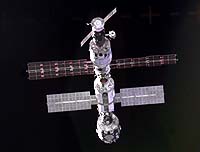
When the Space Shuttle Endeavor is launched later this month on Space Station Flight 4A, on board will be a set of powerful batteries and power electronics built by Space Systems/Loral (SS/L), the first such flight set for the U.S. photovoltaic module which is to be delivered for installation on the International Space Station.
SS/L¿s equipment, built under a contract with Rocketdyne Propulsion & Power Division of the Boeing Company, will be used to store energy and regulate electrical power on the Space Station. SS/L will provide a total of 48 Battery Orbital Replacement Units (ORU), 24 Battery Charge Discharge Units (BCDU), and eight Sequential Shunt Units (SSU) for the final on-orbit configuration of the Space Station.
In its orbit around the earth, the Space Station encounters periods of sunlight and solar eclipse. During sunlight operation, the SSU regulates the electrical power from the solar panels.
Some of the power is used by each BCDU to charge two Battery ORUs, with the rest of the power available for other uses on the Space Station.
The nickel-hydrogen batteries store electrical energy for use during the solar eclipse period encountered during each orbit. The BCDU also conditions and regulates the battery discharge power for use by the Space Station during the solar eclipse period.
The launch will be the first delivery of SS/L¿s Battery ORUs and BCDUs to the International Space Station, scheduled for launch on the Endeavor (Mission STS-97) on November 30.
This mission will carry the P6 Integrated Truss Structure, consisting of 12 Battery ORUs, six BCDUs, and two Sequential Shunt Units (SSUs) manufactured by SS/L. An earlier SS/L-built SSU was carried to the Space Station on May 27, 1999.
