
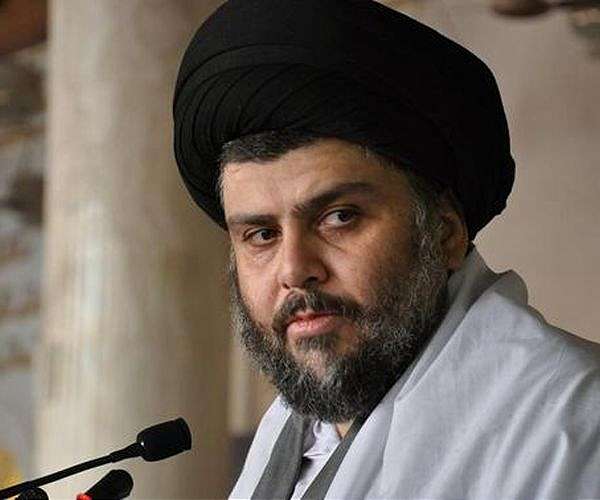
Iraq's powerful Shiite Muslim leader Moqtada Sadr on Saturday said "all parties" including his own should give up government positions in order to help resolve a months-long political crisis.
Since the aftermath of the US-led invasion of 2003 that toppled longtime dictator Saddam Hussein, Iraq has been governed under a sectarian power-sharing system.
But since elections in October last year, political deadlock has left the country without a new government, prime minister or president, due to disagreement between factions over forming a coalition.
Sadr and his supporters have been calling for parliament to be dissolved and for new elections, but on Saturday he said doing so was not "so important".
Instead, it is "more important" that "all parties and figures who have been part of the political process from the American occupation in 2003 until now no longer participate", Sadr said on Twitter.
"That includes the Sadrist movement," he added.
"I am ready to sign an agreement to this effect within 72 hours," he said, warning that without such a move, "there would no longer be anymore room for reforms."
He did not indicate who he expected would lead a future government.
Sadr's supporters have for weeks been staging a sit-in outside Iraq's parliament, after initially storming the legislature's interior, to press for their demands.
On Tuesday, they also pitched tents outside the judicial body's headquarters in Baghdad for several hours.
Sadr's rivals in the pro-Iran Coordination Framework want a new head of government to be appointed before any new polls are held.
Caretaker Prime Minister Mustafa al-Kadhemi earlier this month convened crisis talks with party leaders, but they were boycotted by the Sadrists.
Iraq's Sadrists refile call for judiciary to suspend parliament
Baghdad (AFP) Aug 26, 2022 –
Populist Shiite cleric Moqtada Sadr's camp on Friday refiled a petition for Iraq's judiciary to suspend parliament to clear the way for fresh elections amid a months-long political deadlock.
A source within the judiciary said it would give its response on Tuesday to the second such motion within a month submitted by the Sadrists.
At weekly Friday prayers near parliament attended by thousands of Sadr supporters, an aide to the cleric urged the justice system to pay heed to his calls.
"I will give you some advice," Mohaned al-Mussawi, a Sadr loyalist, said in a sermon on Friday. "We expect the judiciary to confirm the (people's) rights and give hope to the people".
"We will not abandon our rights," he added.
The judiciary already said last Sunday that it lacks the authority to dissolve parliament as demanded by Sadr, who is engaged in a standoff with Shiite political rivals.
Followers of Sadr, in defiance of the rival pro-Iran Coordination Framework, have for weeks been staging a sit-in outside Iraq's parliament, after initially storming the legislature's interior.
On Tuesday, the Sadrists also pitched tents outside the gates of the judicial body's headquarters in Baghdad for several hours.
The judiciary, in its ruling on Sunday, said "the Supreme Judicial Council has no jurisdiction to dissolve parliament", citing "the principle of a separation of powers".
Under the constitution, parliament can only be dissolved by an absolute majority vote in the house, following a request by one-third of deputies or by the prime minister with the approval of the president.
Nearly 10 months on from the last elections, Iraq still has no government, new prime minister or new president, due to disagreement between factions over forming a coalition.
