
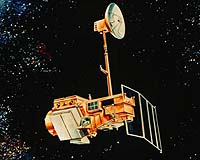
On November 26, 2005, the back-up solar array drive on Landsat 5 began exhibiting unusual behavior. The solar array drive maintains the proper pointing angle between the solar array and the sun, but its rotation has become became sporadic, and the solar array is currently unable to provide the power needed to charge the batteries.
Maintaining power to the batteries is critical to sustain proper operation of the spacecraft and the primary solar array drive failed under similar circumstances last January. As a result of this current situation, imaging operations will be suspended for at least the next two weeks, or until attempts to solve the problem have been resolved.
Landsat 5, launched in March 1984, has performed far beyond its three-year design lifetime and has continued to collect global land surface coverage. Over 125,000 images, from the Chernobyl disaster to Hurricane Katrina, have proven invaluable for identifying the impact of natural and human-induced changes. Landsat 5 and Landsat 7, together, have been providing full global coverage of the Earth's surface every eight days.
The Landsat Program is the longest running program providing vital images of the Earth's surface from space. The first Landsat satellite was launched in 1972. In 1999, the Landsat Program took a giant technological leap forward with the launch of Landsat 7.
