
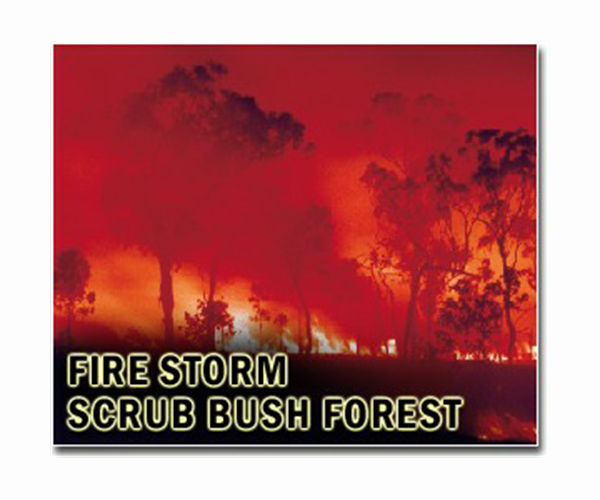
Thousands of tourists and residents were evacuated and a thick cloud of smoke and ash hung over Athens as "nightmarish" forest fires raged in Greece Saturday, while heavy rains brought some relief to neighbouring Turkey.
At least 1,450 Greek firefighters along with 15 aircraft were battling the infernos, with reinforcements arriving from other countries, the fire service said.
The blazes in Greece are set to continue, with strong winds and temperatures of up to 38 degrees C (100 F) forecast in some regions on Saturday.
As of August 5, the areas burnt were 180 percent more than the average for the period 2008-2020, according to the European Forest Fire Information System.
"When this nightmarish summer ends we will reverse the damage as soon as possible," Prime Minister Kyriakos Mitsotakis pledged on Saturday.
Greece and Turkey have been fighting devastating fires for more than a week as the region suffers its worst heatwave in decades. Officials and experts have linked such intense weather events to climate change.
A UN draft report seen by AFP labelled the Mediterranean region a "climate change hotspot", warning that heatwaves, droughts and fires would become more fierce in the future, supercharged by rising temperatures.
The fires have killed two people in Greece, including Konstantinos Michalos, the president of the Athens Chamber of Commerce and Industry.
He was found unconscious in a factory in Krioneri near Athens and was later confirmed dead in hospital.
In Turkey, eight people have been killed and dozens more hospitalised during 10 days of fires.
– Rain in Turkey –
But officials in the Turkish coastal city of Antalya said the blazes were under control in the southwestern province, where it was raining on Saturday.
Heavy rainfall was expected to continue until the afternoon in areas including Manavgat, one of the most affected by the fires.
However, the situation appears to be serious still around the tourist hotspot of Mugla, where firefighting efforts continue and at least three neighbourhoods have been ordered to evacuate.
There have been over 200 fires in 47 of Turkey's 81 provinces, Agriculture and Forestry Minister Bekir Pakdemirli tweeted early on Saturday. Thirteen fires continue in five provinces.
The Greek fire service said Saturday blazes were raging in the Attica peninsula that includes Athens, in Evia, the country's second largest island and located east of the capital, and the Peloponnese region in the southwest.
North of Athens, a fierce blaze tore through vast areas of pine forest, forcing yet more evacuations of villages overnight and blowing thick, choking smoke and ash all over the Greek capital.
Part of a motorway linking Athens to the north of the country has been shut down as a precaution and migrant camps were evacuated.
– Arson suspects held –
In the Evia village of Limni, more than 1,300 people fled the fires on ferry boats. Another 23 were evacuated Saturday morning from the beach at Rovies.
Local authorities on the island called for more air support in the firefighting efforts.
Around 5,000 tourists and residents were also forced to flee another fire in the Peloponnese region.
Eleni Drakoulakou, the mayor of East Mani, told ERT TV on Saturday that 50 percent of the Peloponnese town has been burnt, blaming a lack of water-dropping air support during the critical first hours of the wildfire.
Meanwhile, the ANA news agency said two people were being held on suspicion of arson.
In Athens, police arrested a woman in a park on Friday as she was carrying two lighters, petrol and flammable materials, a few minutes after a fire broke out there.
Authorities have banned visits to parks and forests through Greece, according to ANA.
A 43-year-old man was arrested in the area of Krioneri and charged with arson, according to ANA.
Human action blamed for most of Italy's summer fires
Rome (AFP) Aug 5, 2021 –
More than 70 percent of fires that have swept Italy this summer are caused by human action, aided by climate change, a government minister said Thursday.
Firefighting planes were deployed again overnight to tackle forest fires in the southern region of Calabria and on the island of Sicily, where flames threatened a nature reserve in the north.
They are the latest in hundreds of blazes that have broken out across the peninsula in recent weeks, with one, in the west of the island of Sardinia, ravaging almost 20,000 hectares.
Roberto Cingolani, the minister for ecological transition, told parliament Thursday that 57.4 percent of the fires are caused by arson and 13.7 percent the result of unintentional human action.
"Our actions are responsible for more than 70 percent," he said, adding that less than two percent of fires were down to natural causes such as lightning.
He said the impact of climate change was felt through "a reduction in the average humidity of the soil, to which are added… dry, high temperature winds."
Cingolani said he did not understand why people would start such fires, as they brought no economic benefit.
Under the law, "in areas that have been on fire, for 15 years you can't do anything different from what was there before", he said.
Turkey and Greece have also been battling major blazes this summer that officials and experts have linked to increasingly frequent and intense weather events caused by climate change.
The European Union has sent help to a number of countries including Italy and Greece in the form of planes, helicopters and firefighters.
In Sicily, firefighters in Palermo reported facing more than 40 fires in scrubland on Wednesday, which they said were "fuelled by high temperatures and the strong wind".
The Coldiretti agricultural organisation said it would take up to 15 years to re-establish the woodlands lost by the fires, calling for more protection against blazes.
Meanwhile, heavy rain in the north of Italy has also been causing problems, with flooding around the picturesque tourist hotspot of Lake Como.
Firefighters said they evacuated 120 people late Wednesday from a campsite in Dervio, on the eastern shore, as a precaution.
And around 100 guests were evacuated from a hotel on the northern edge after it became partially submerged in mud and debris, according to the ANSA news agency.
