
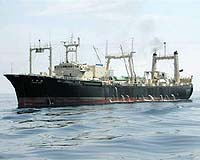
New Zealand demanded an explanation from Japan Friday why a crippled whaling ship remained in Antarctic waters posing a potential environmental threat. Eight days after fire erupted below decks on the Nisshin Maru, claiming one life, the ship had not been moved although the crew said the main engine was working again. The mothership of the Japanese whaling fleet is carrying more than 1.3 million litres of fuel and lies just 100 kilometres (60 miles) off the Antarctic coast.
New Zealand Conservation Minister Chris Carter said the government urgently wanted it out of the area to avoid the potential for an environmental disaster.
"We want it out of there," Carter said, adding he had made another personal telephone call to the Japanese ambassador, Masaki Saito, to tell him of the government's concern.
The Japanese response was "non-committal", he said.
Carter said New Zealand's maritime authority had sent a series of technical questions to the Japanese embassy about the sea-worthiness of the Nisshin Maru, the whaling mothership.
"We keep hearing these optimistic reports that the engine is working and that they are making great progress but the bottom line is it is still stationary in the water," he said.
"I will accept that the ship is working again when it starts moving under its own steam but there doesn't seem to be any sign of that yet."
A spokesman for the Japanese whalers, Glen Inwood, said the main engine was going but sailors had turned it off while they continued with other repairs on board.
The weather in the Ross Sea was still calm and the ship was not in any danger from pack ice, he said.
earlier related report
Whalers say crippled Japan ship restarted
The captain of a Japanese whaler crippled in Antarctic waters has managed to restart the engines and will soon decide when and how to leave the area, a spokesman said Thursday.
The vessel has been disabled since a fire erupted below decks a week ago, sparking fears of an environmental catastrophe should any fuel leak.
A spokesman for Japan's whaling programme, Glen Inwood, said the ship's crew had made sufficient repairs to restore power to the vessel and that safety checks were being carried out.
"The engines have been turned over and obviously the skipper's decided to shut them off again," Inwood said. "I'm not sure why that's the case but I'm hoping it's just to continue the checks on the vessel."
The Nisshin Maru, carrying more than 1.3 million litres of fuel, is just 100 kilometres (60 miles) from the world's biggest Adelie penguin colony at Cape Adare on the Antarctic coast.
Inwood said no decision had been made on whether the whaling season will continue or if the fleet will return to Japan.
The main concern was whether the processing deck was able to be used again, following extensive damage during the fire.
Offers of help to move the stricken ship over the past week have been rejected, drawing a warning from New Zealand that Tokyo faced international condemnation if there was any fuel leakage.
The International Whaling Commission imposed a moratorium on commercial whaling in 1986, but Japan has continued hunting for what it calls scientific research.
