
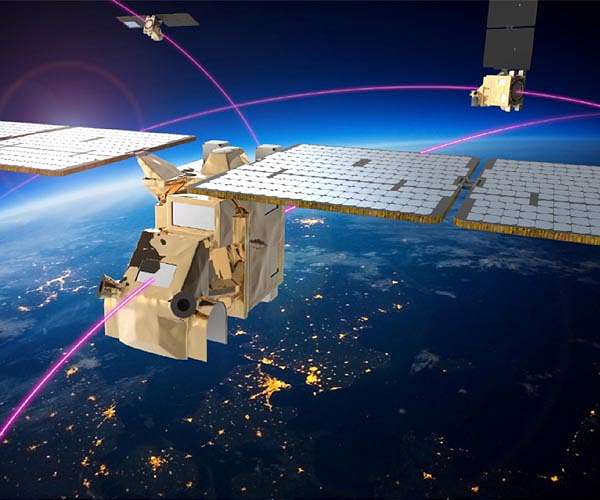
ESA's Arctic Weather Satellite is set to launch in a few weeks. Currently, the satellite is at Vandenberg Space Force Base in California for final preparations. This mission aims to improve short-term weather forecasts in the Arctic and beyond once the satellite is in orbit.
Weighing 125 kg, the satellite features a 19-channel cross-track scanning microwave radiometer, providing high-resolution vertical profiles of atmospheric temperature and humidity in all weather conditions. Humidity data are crucial for Arctic weather forecasting due to the rapid changes in water vapour in this region.
"Embracing the New Space approach, the Arctic Weather Satellite was developed and built within 36 months, and with a much tighter budget than traditional Earth observation missions."
Developed under the New Space approach, the Arctic Weather Satellite was built in 36 months with a significantly reduced budget compared to traditional Earth observation missions. It serves as a prototype for a potential constellation called EPS-Sterna, which ESA plans to build for Eumetsat after the prototype demonstrates its capabilities over a year in orbit.
The Arctic is experiencing the effects of the climate crisis more intensely than other regions. These changes impact the entire Earth system. While the Arctic is the primary focus, meteorologists can use the constellation to enhance global weather forecasts. Data from the Arctic Weather Satellite and the Sterna constellation will also aid climate change research.
Engineers from over 30 European companies have collaborated under ESA's guidance over the past three years to reach this point. The satellite was shipped from Sweden to the US for launch on June 1, undergoing a series of health checks upon arrival at Vandenberg.
OHB Sweden, the prime contractor, along with Exolaunch and ESA, have installed the satellite on the launch separation system. Final preparations, including battery charging, are underway for its launch on the Space-X Falcon 9 Transporter-11 Mission.
Once in orbit, the satellite will be operated from the KSAT operational centre in Tromso, Norway, by a team from KSAT, OHB, and ESA.
