
Expat foreign men can be glad they live in Japan; the nation sports some of the best urologists, the most advanced medical technologies, procedures, and treatments for issues related to the prostate gland.
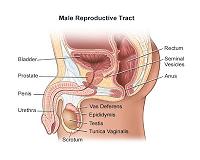
Men normally don't think about their prostate gland until they age. Located between the bladder and pelvic floor muscles in front of the rectum, the walnut-shaped prostrate is an important part of the male reproductive system, tasked with the job of producing fluid that mixes with sperm to form semen during ejaculation.
From the age of about 30 years, however, the gland's cells begin multiplying. Sometimes this is attributed to obesity, which increases circulating estrogen. By 50, half of all men begin to show evidence of Benign Prostatic Hyperplasia (BPH), a potentially serious condition and one of the ten most prominent and costly diseases in older men.
An enlarged prostrate has the potential to cause serious health complications by compressing other nearby structures and producing large amounts of hormones.
As the prostate swells, it can press on the urethra, blocking urine flow from the bladder, and lead to hydronephrosis (water in the kidneys). Postrenal kidney failure due to severe waste buildup in the kidneys, and urosepsis (septic poisoning from retained urine) can be deadly if left untreated. If the bladder has been damaged, in some cases the prostate is removed.
Prostrate sufferers can breathe a sigh of relief, as two good minimally invasive procedures are available. Transurethral resection of the prostate (TURP) involves in insertion of a resectoscope via the penis, after which an electrical loop is used to cut away overgrown prostrate tissue.
Holmium Laser Enucleation (HoLEP), recognized as the new gold standard for prostate surgery, also allows for the dissection of obstructive tissue by use of a laser introduced in the same way. Either procedure can be completed in 60 to 90 minutes under general or spinal anesthesia with minimal pain or bleeding and require no stitches or dressings. Most patients can expect a rapid improvement in urinary flow rate.
Urologists choose treatments for BPH based on prostate swelling and symptoms. Men diagnosed with a higher preoperative chance for contracting prostate cancer are advised to have HoLEP or TURP. Because HoLEP is less dependent on prostate size, very large prostates can be treated with less need for reoperation. The prostate is not removed unless it is cancerous.
HoLEP and TURP are not without their potential side effects. Dry orgasm, also known as retrograde ejaculation, can occur due to the backward flow of semen into the bladder rather than out through the penis. But this does not interfere with sexual activity.
There is nothing to lose from keeping tabs on your health, especially as you age, so make sure to have your prostate checked!
Hilary Valdez is a former U.S. Marine, a certified substance abuse counselor, a master resiliency trainer, and emergency trauma specialist. He is a former investigator with the U.S. Departments of Justice and Labor, and a former Regional Crisis Response Manager for the Department of Defense in Asia, where he has lived for 20 years. He has authored several works, including Danger Beyond Intrigue, Instant Insights, and Affirmations for Life. For more information, see http://www.hlvaldez.com.
