
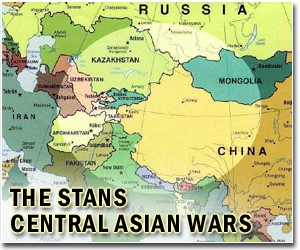
Russia is giving discreet advice to US officials on Afghanistan but will "never again" send troops to the war-torn country, Deputy Prime Minister Sergei Ivanov said on Sunday.
"By the way, next year I think the ISAF will break the Soviet record of the duration of stay in Afghanistan," Ivanov said during a question-and-answer session with delegates to a regional security conference in Singapore.
He was referring to the US-led International Security Assistance Force (ISAF) operating in Afghanistan since a US-led invasion toppled the hardline Taliban regime in the wake of the September 2001 attacks in the United States.
Ivanov, a former defence minister, declined to comment on US tactics in Afghanistan but called for more to be done to improve the socio-economic infrastructure to back up military efforts against militants.
"I can't give advice, particularly publicly," Ivanov told an audience of defence ministers, military officials and scholars as the annual forum known as the Shangri-La Dialogue drew to a close.
"I have to confess… meeting American defence secretaries, central intelligence chiefs, state department chiefs, we discussed it.
"If we are asked, we answer, but it's difficult to comment publicly, really difficult."
Ivanov said Russia was providing various forms of support to the ISAF including logistics, transport and intelligence, but ruled out Moscow ever sending its troops into Afghanistan.
"Never again a Russian soldier would enter Afghanistan," said Ivanov.
"I think you understand why. It's like asking the United States whether they will send troops to Vietnam," he said.
"It's something like that. It's totally impossible."
The Soviet occupation of Afghanistan, which lasted from from 1979-1989, cost over 13,000 Soviet lives and contributed to the breakup of the Soviet Union.
earlier related report
Pakistan unveils defence spending hike, 4 percent deficit
Islamabad (AFP) June 5, 2010 –
Pakistan's government hiked defence spending and government employees' salaries while also raising relief for the poor in an upbeat budget announcement Saturday that set a deficit of four percent of GDP.
The budget for the fiscal year 2010-2011 starting July 1 comes as pressure mounts on Pakistan to open up a new front against Taliban militants in northwestern tribal areas bordering Afghanistan.
It earmarks 442.2 billion rupees (5.2 billion dollars) for defence, an 18 percent rise on the 378 billion rupees (4.4 billion dollars) in the fiscal year ending June 30.
"We are facing a situation in which our military, paramilitary forces, police and security forces are sacrificing their lives for this country," finance minister Abdul Hafeez Shaikh told parliament. "The security situation has not been totally brought under control in spite of the recent gains."
In the last three years more than 3,400 people have been killed across Pakistan in bomb blast and suicide attacks blamed on Taliban militants.
The total size of the budget for the next year has been fixed at 3,259 billion rupees (38.3 billion dollars), a 10 percent rise, with a budget deficit of 685 billion rupees (eight billion dollars), or four percent of gross domestic product (GDP), Shaikh said.
The social development allocation is 766.5 rupees (nine billion dollars), while the budget provides a 50 percent pay rise for government employees, and tax relief for those on low incomes.
"People are at the heart and centre of this budget," Shaikh said.
"The best relief package that a government can give to its people is to reduce inflation because it is detrimental to poor sections of the society," he added, thumping his desk.
Shaikh said government policies had arrested inflation and brought economic stability.
"We are seeing the beginning of recovery. Inflation has been checked from a peak which had reached 25 percent," he said. In April, the inflation rate was 13.3 percent, Shaikh said earlier.
"In GDP a turn around is being seen, it has reached 4.1 percent, our foreign currency reserves have reached 16 billion dollars, remittances have increased to 8.5 billion dollars," Shaikh said.
"We have achieved some macro-stability, checked inflation and begun to impact the growth rate."
However Shaikh admitted that government had not been successful in dealing with energy shortages and creating employment during the outgoing fiscal year, noting that Pakistan has sought help from the IMF.
Pakistan approached the International Monetary Fund in 2008 and has secured a 11.3 billion dollar standby loan in an effort to contain inflation and cope with a rapid depletion of reserves that were barely enough to cover nine weeks of import bills.
Share This Article With Planet Earth
