
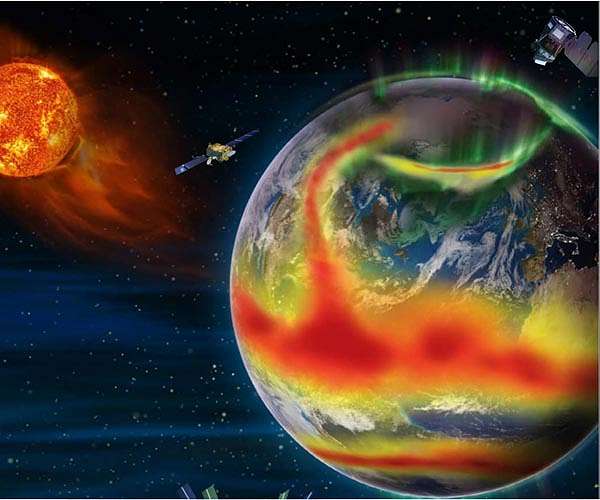
Space weather is defined as the environmental conditions produced in near-Earth space because of solar activity.
These phenomena directly affect our technological infrastructure, in particular, satellites, power grids, and communication systems.
Therefore, we must learn how to predict and counteract such adverse phenomena.
What is "Space Weather"?
Our Sun continuously emits streams of charged particles known as solar wind. When solar activity is high, large amounts of energy and particles are released into surrounding space.
When these particles reach Earth, they interact with the magnetic field and cause geomagnetic storms.
Geomagnetic storms can then induce currents in power lines, disrupt radio communications, and even damage orbiting satellites.
Observation and Prevention Technologies
When it comes to preventing and controlling the effects of space weather, there are several technologies developed for monitoring and forecasting:
+ Solar observing satellites: Missions such as NASA's Solar Dynamics Observatory (SDO) can provide images of the Sun. With these, researchers can study solar flares live.
+ Geostationary Operational Environmental Satellites (GOES-R): These are satellites operated by the National Oceanic and Atmospheric Administration (NOAA). They feature advanced technology and are used to study solar activity along with geomagnetic conditions.
+ Prediction models based on artificial intelligence: Recent research has explored the possibility of predicting solar flares through machine learning. These models analyze solar data to detect patterns that could precede major solar events.
Mitigating the effects on ground infrastructure
When discussing the defense of ground infrastructure from the effects of space weather, the following methods should be considered:
+ Power grid enhancement: Geomagnetic storms can induce currents in power lines, which could cause damage to transformers. In this regard, implementing robust designs and real-time control systems can help reduce the risk of blackouts.
+ Satellite protection: Satellite operators can test strategies – such as turning off or reorienting them – to cope with space weather. Likewise, adequate shielding of equipment helps reduce the risk related to solar energetic particles.
+ Communication and navigation systems: Disturbances in the ionosphere can influence GPS signals and radio waves. Installing redundant systems and correction algorithms can help strengthen the resilience of these communication systems.
Recent Advances and Future Challenges
In May 2024, one of the most intense solar storms occurred in the past two decades. This highlighted the shortcomings we still have when it comes to better monitoring and dealing with these types of situations.
We also know that the Sun is approaching a phase called the "combat zone." This is characterized by increased solar activity that creates coronal holes, which can damage satellites and the infrastructure we depend on.
As space and terrestrial technology increasingly impact our lives, we believe that we should allocate funds to research and development to study space weather and its effects in greater depth.
In turn, you should search for "Download VPN" to find the best tools to gain access to any content regardless of your location. This allows you to obtain more reliable and censorship-free results when researching preventive strategies.
The Importance of International Cooperation
Given that space weather is a global challenge, it needs coordinated efforts to tackle its impacts through international cooperation.
Different space agencies and research institutes must cooperate to formulate more effective forecasting models, exchange crucial data, and have coordinated responses.
Organizations such as NASA, NOAA, and the European Space Agency (ESA) already have ongoing cooperation in space weather research. However, as further reliance on space technology increases, there shall be more cooperation with other states.
Countries with well-established electrical and satellite infrastructures should support developing nations in enhancing their resilience against space weather threats.
Global cooperation will provide an umbrella over any other approaches to risk management of space weather.
Space weather poses a significant challenge to contemporary infrastructure, but the use of advanced space weather monitoring technology, AI-based predictive models, and anticipatory and active mitigation strategies can help reduce the risk of being affected by space weather.
Continued research and investment in space weather forecasting will be paramount for protecting satellites, power grids, and communication infrastructure from solar events.
Additionally, international collaboration will contribute to enhancing global resilience to the unpredictability of space weather, ensuring that societies worldwide remain protected against its disruptive powers.
