
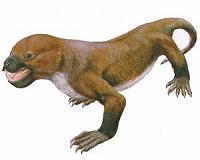
Researchers at Midwestern University have discovered that the muscles that control the unique mammalian perineal structures follow an ancient pattern.
The study, published today in Scientific Reports, showed that despite the perineum's structural complexity, the muscles of the mammalian perineum show a reemergence of a pattern of body wall layering that has its origins more than 360 million years ago.
Mammalian perineal structure comes from separation of the cloaca, and is a vital evolutionary innovation that allows a variety of anatomical configurations, diverse reproductive methods and precise excretory control in mammals alone.
Placentalia, the group of mammals that include humans, is the only group of vertebrates to evolve the specialize suite of perineal characteristics that include erectile tissues of the penis and the clitoris, the urethra, the distal rectum, the anus, as well as the voluntary muscles that control these structures.
The team performed detailed dissections and examinations of embryological development to make their discovery.
The study is the first time that the four serially homologous trunk body wall layers in the mammalian perineum are defined.
Study solves mystery of how first animals appeared on Earth
Research led by The Australian National University (ANU) has solved the mystery of how the first animals appeared on Earth, a pivotal moment for the planet without which humans would not exist.
Lead researcher Associate Professor Jochen Brocks said the team found the answer in ancient sedimentary rocks from central Australia.
"We crushed these rocks to powder and extracted molecules … read more
