
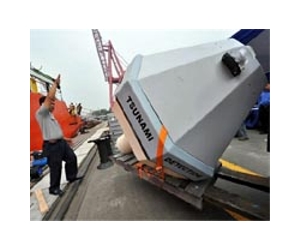
The Caribbean's readiness for the type of natural disaster that recently struck Japan will be tested when its tsunami warning system undergoes a simulated emergency.
Thirty-three countries are preparing to participate in the March 23 exercise, organized by a branch of the United Nations in response to the 9.0 earthquake and tsunami that has devastated Japan.
UNESCO Director-General Irina Bokova said Japan's experience shows "how essential alert systems are."
"In this context the development of a coordinated system in the Caribbean is more relevant than ever, enabling coastal countries to prepare in the event of such a disaster and to save human lives," Bokova said in a statement.
The goal is to test the warning system established in 2005 by the countries of the region in collaboration with UNESCO's Intergovernmental Oceanographic Commission (IOC).
There will be a simulated 7.6 magnitude earthquake off the coast of the US Virgin Islands. Then, bulletins will be issued around the region to focal points such as coast guard stations and other government offices. It does not involve communities.
"The test is designed to determine whether Caribbean countries are ready to respond in the event of a dangerous tsunami," the UNESCO statement said.
Seventy-five tsunamis have struck in the Caribbean in the past 500 years, representing 10 percent of tsunamis worldwide in that period, according to the US National Oceanic and Atmospheric Administration.
Share This Article With Planet Earth
