
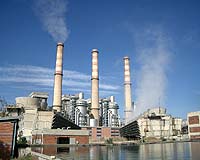
The European Court for Human Rights (ECHR) on Tuesday found Turkey guilty of violating citizens' rights for failing to close three thermal power stations which were polluting the local environment, despite rulings for a shutdown in Turkish courts.
According to ECHR documents, the case was brought by 10 Turkish lawyers who live and practice in Izmir, about 250 kilometers (155 miles) from the site of the Yatagan, Yenikoy and Gokova power stations.
The three power plants are operated by the Turkish Ministry of Energy and Natural Resources and the public utility company known as TEAS in Mugla, in southwestern Turkey.
The applicants first appealed to the government to close the plants which they claimed were endangering public health but received no reply.
They then took the matter to a Turkish administrative court which in 1996 commissioned an expert report that found the stations emitted dangerous levels of nitrogen dioxide and sulphur dioxide within a 25-30-kilometer radius, and ordered the plants to suspend operations.
But the Turkish government decided to keep the plants running, arguing that they supplied seven percent of the country's electricity and were vital for the economy including providing over 4,000 jobs.
The court ruled that Turkish citizens have the right to live in a healthy environment and that the government's decision to put aside the judgment of the administrative court "was obviously unlawful under domestic law" and was "tantamount to circumventing the judicial decisions."
The court found Ankara in violation of the European Convention on Human Rights on the right to a fair trial.
