
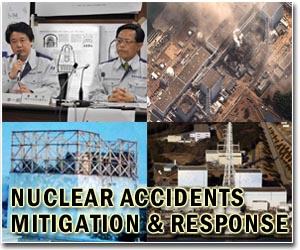
Experts from the UN atomic agency IAEA will unveil their preliminary findings Friday as they conclude a one-week mission to assist Japan with clean-up efforts after the Fukushima nuclear accident.
The mission of 12 international experts has been in Japan since October 7 to discuss decontamination efforts with local authorities.
The mission, requested by the Japanese government, is led by Juan Carlos Lentijo, head of radiation protection at the Spanish nuclear regulatory authority, who will give a news conference later in the day.
The experts visited the crippled plant and several other locations in Fukushima prefecture, including the cities of Minamisoma and Date, in addition to Iitate village.
Local residents of Iitate have been evacuated due to high levels of radioactive fall-out from the plant.
The final report of the remediation mission will be presented to the Japanese government later in the month, the International Atomic Energy Agency said.
The process of fully restoring the areas around the crippled Fukushima plant is expected to take decades.
The task of restoring towns and villages even in lightly contaminated zones is complicated, with high costs and logistical issues of where to store soil contaminated with radioactive caesium after it is removed.
Tens of thousands of people remain evacuated from areas in and beyond the 20-kilometre no-go zone around the Fukushima Daiichi plant.
A towering tsunami released by the March 11 earthquake crippled the plant's cooling systems and triggered explosions and reactor meltdowns, leading to the release of radiation into the environment and orders to evacuate.
Seven months on, radiation emissions from the plant have been reduced as crews work to put the facility into a stable state of cold shutdown by January.
In September Japan eased evacuation advisories for five areas near the crippled Fukushima nuclear plant as it looks to convince nearly 30,000 residents that it is safe to return home.
