
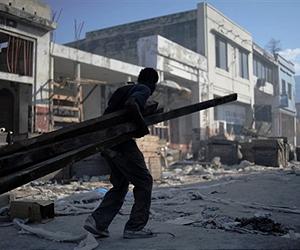
Gangsters and child traffickers could try to exploit the chaos triggered by Haiti's devastating earthquake to step up their criminal activities, the UN human rights chief warned Wednesday.
Navi Pillay told the UN Human Rights Council meeting in Geneva of her fears that prisoners who had escaped from flattened jails, including hardened gang members, "may secure weapons and engage in violent criminal activities."
In a message, Pillay also cited "alarming reports of summary executions of some of those alleged prisoners carried out by angry mobs."
"Drawing from lessons learned in the past, we must prevent and curb those violations that often occur in post-disaster circumstances," added the High Commissioner for Human Rights.
The 7.0 magnitude January 12 quake killed at least 150,000 people and has left hundreds of thousands homeless, compounding the chronic insecurity and poverty that Haiti has suffered for decades.
A massive international aid operation is under way, shored up by some of the 20,000 US troops deployed to the region.
There have been consistent reports of looting and sporadic gunfire across the capital Port-au-Prince, although it was dogged by insecurity even before the quake.
Dermot Carty, deputy director of the UN children's fund UNICEF, said the chaotic situation in Haiti offered a "conducive environment" for traffickers and smugglers to abduct Haitian children.
UNICEF reported last week that children had gone missing from hospitals in Haiti, raising fears they had been trafficked for adoption abroad.
Michel Forst, an independent UN expert on human rights in Haiti, said some gang leaders had escaped from prison after the quake and were now at liberty, while the policing and judicial system had been badly affected.
Last year Forst had hailed progress in beefing up security in Haiti, noting in particular the arrest of some gang leaders.
The Human Rights Council opened its extraordinary session with a minute's silence in memory of victims of the quake.
The meeting is due to conclude Thursday with a statement expressing concern at the vulnerability of children, women and the elderly as well as the infirm, injured or homeless.
Spanish representative Javier Garrigues, whose country holds the rotating European Union presidency, said the international community must also step up its support for good governance in Haiti and help authorities there maintain security and uphold the rule of law.
For Brazil, Foreign Minister Celso Amorim said the challenge in rebuilding Haiti would be to preserve its sovereignty while ensuring greater democracy, security and human rights.
Brazilian President Luiz Inacio Lula da Silva on Tuesday blamed developed nations for Haiti's poverty and misery, saying he hoped the quake would shame world leaders into doing what they should have done decades ago.
Share This Article With Planet Earth
