American forces in Iraq will begin to transfer coalition-held prisoners to the Iraqi authorities from the beginning of February, a top US commander said in a statement on Thursday.
"The first batch of files to be reviewed by the government of Iraq (GoI) will be available December 15," Brigadier General David Quantock told US and Iraqi officials.
"This will give the GoI 45 days to review the files and identify the detainees they wish to be released or transferred to Iraqi prisons beginning February 1, 2009," the statement quoted him as saying.
Quantock, who heads Task Force 134, the organisation responsible for the care and custody of detainees held by coalition forces, was addressing the first meeting of a special committee that met on Wednesday to discuss the fate of prisoners.
"Their decisions should be based on their intelligence information or existing arrest warrants," he said.
Quantock said Task Force 134 will provide the Baghdad government with "1,500 files … on the first day of each month until all Iraqi detainees in coalition custody have been released or transferred."
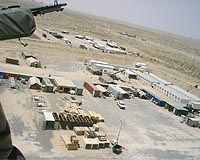
Some 15,800 prisoners are currently held in two locations. These are Camp Cropper, within Camp Victory, near Baghdad airport and Camp Bucca, a sprawling US detention facility in the Um Qasr port area of the southern city of Basra.
A spokesman for Task Force 134 told AFP that US forces plan to close Camp Bucca and set up a detention centre at Camp Taji, a US military base just north of the capital.
"We will continue to reduce our detainee population in a safe and orderly manner in accordance with the Geneva Convention. Once our population gets below 8,000, we will close Camp Bucca," said First Lieutenant Randi Norton.
"In March 2009, we will stand up the Theatre Internment Facility Reconciliation Centre at Camp Taji, which will be completely turned over to the Iraqis in December 2009," he added.
"During this transition, we will continue to have a partnership with the Iraqis in releasing detainees, compiling cases for the Central Criminal Court of Iraq, and training Iraqi Correctional Officers."
Asked in Washington what the role of US soldiers would be at the facilities fter January 1, particularly at Camp Cropper, Iraqi government spokesman Ali al-Dabbagh said: "We will be the boss but we will ask the Americains for protection and managment (of these prisons) for a few months."
General Raymond Odierno, the US commander in Iraq who attended the Wednesday meeting with Iraqi Deputy Prime Minister Barham Saleh, insisted that the process must be "transparent" and "apply to all parties."
Odierno "stressed the importance of the proper transfer of detainees and their treatment as vital to the international legitimacy of Iraq in the future," the statement said.
Saleh said that the committee wishes to "release as many detainees as possible, while being careful not to release criminals or those who will return to terrorist activities."
According to the wide-ranging US-Iraqi military pact that governs the withdrawal of US troops by the end of 2011, US troops must release or transfer to Iraqi authorities all Iraqi prisoners from January 1.
Share This Article With Planet Earth