
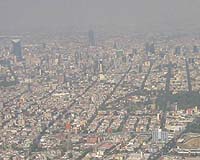
Two thirds of the world's population will be living in cities in 50 years time, up from 50 percent now, an international conference on the challenges of urbanisation in Madrid heard on Thursday.
City leaders from across the world, including the mayors of Sao Paulo, Milan, Lisbon, Stockholm, Singapore and Casablanca, gathered to discuss the impact this growth has on the environment and people's quality of life.
The head of the Organisation for Economic Cooperation and Development (OECD) Angel Gurria warned that cities emit 70 percent of greenhouse gases and said they must urgently respond to the affect this has on global warming.
Earlier this month, 200 local government leaders from five continents called for a "braver" approach in dealing with global warming at a meeting of the United Cities and Local Governments (UCLG) in Paris.
According to the OECD, there are currently 400 cities across the world with more than one million inhabitants, and this figure is growing.
Pollution is seriously affecting the quality of life in metropolitan areas such as Tokyo, Shanghai, Beijing, Mexico City, Cairo and Lagos, and Gurria warned that immigration was adding extra pressure.
The proportion of immigrants in Madrid, a town of 3.2 million inhabitants, has gone up from four to 15 percent in the past six years, he said.
Madrid's mayor Alberto Ruiz Gallardon, one of the organisers of the two-day conference set up under the aupices of the OECD, said cities must coordinate to pre-empt and not just react to the "enormous challenges" of urbanisation.
Spain's public administration minister Jordi Sevilla Segura added that while cities could drive creativity and innovation, they were also the cause of "serious social divisions".
In 1950, only a third of people lived in urban areas, but this increased to 50 percent in 2007 and will rise to two-thirds in 50 years time, Sevilla said.
He announced that new research would be carried out in Spain after May's local elections to identify factors affecting the quality of life in cities.
