
Bacterial and archaeal plankton, as the most abundant form of life in the oceans, profoundly influence the global environment. Based on a broad survey of the seas, researchers from KAUST have developed a model that predicts how climate change might affect these microbial populations1.
Temperature, nutrient availability and mortality rates are three primary factors that can strongly influence the numbers of these simple organisms known as heterotrophic planktonic prokaryotes.
"I have long been intrigued about possible relationships between these three primary controls and whether or not there are systematic patterns," said KAUST Associate Professor of Marine Science Xose Anxelu Moran, who led the research.
Although Moran had previously investigated these factors at some oceanic sites, the Malaspina 2010 Global Circumnavigation Expedition gave him the opportunity to extend this analysis worldwide.
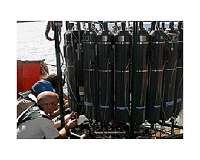
During this expedition, which was led by Moran's collaborator and KAUST colleague, Carlos Duarte, the researchers analyzed samples from 109 different sites in the Atlantic, Indian and Pacific Oceans.
At each site, they quantified the mass of heterotrophic planktonic prokaryotes and the extent to which these organisms were reproducing. These data allowed them to determine the relative effects of temperature and nutrient availability on microbial populations.
Moran's team also measured the number of viruses and larger microbes that can kill or consume these plankton.
By analyzing the contributions of these three factors, a coherent picture began to emerge. "If either the availability of food or the rates of predation or viral attack are limiting the growth of planktonic bacteria, then temperature plays only a minor role," explained Moran. "Conversely, if bacteria are freed from these two controls, then temperature becomes the predominant factor."
However, the researchers also found that there were important geographic factors governing the effect of temperature: the impact of warming is predicted to be greater moving toward the poles than in waters nearer to the equator.
Oceanic ecosystems may draw excess carbon out of the atmosphere, but Moran points out that proliferation of planktonic prokaryotes at the expense of larger organisms can undermine this carbon sequestration. Thus, understanding where and how much these populations are affected by warming will have important implications for the environment.
Moran is now putting his team's model to the test by examining how environmental changes affect growth behavior of surface-dwelling plankton from Red Sea waters near KAUST. "We want to prove it experimentally in the Red Sea, the hottest deep marine basin in the world," he said.
Larger-than-normal dead zone expected in Chesapeake Bay this summer
The latest forecasting models are predicting a larger-than-average dead zone in the Chesapeake Bay this summer.
The dead zone, an area with little to no oxygen, is expected to reach a peak size of 1.89 cubic miles – the equivalent of 3.2 million Olympic-size swimming pools.
Dead zones are triggered by excess nutrient runoff from agriculture and wastewater. Precipitation totals p … read more
