
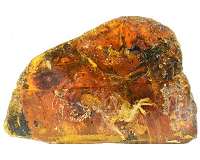
Newly analyzed amber fossils have helped scientists characterize the evolutionary history of myrmeleontiformia, a group of lacewing insects that includes antlions and is distinguished by predatory larvae and unusual morphologies.
Because the larvae of antlions and their relatives fail to fossilize outside amber inclusions, the fossil record is limited. The newly surveyed Burmese amber fossils, hailing from the mid-Cretaceous, allowed scientists to compare extant and extinct myrmeleontiformia taxa.
Analysis of the 99-million-year-old amber fossils showed myrmeleontiformia morphologies didn't change much during the subsequent 100 million years, through the end of the Cretaceous.
The findings — published this week in the journal Nature Communications — suggest antlions continued to deploy the same variety of unique behaviors and morphological adaptations throughout the Cretaceous.
"This morphological stasis helped in reconstructing behaviors not preserved by a trace in the fossil record," researchers wrote in a news release. "Inference of these behaviors sheds light on the ecological niche and lifestyle of extinct myrmeleontiformia."
The amber fossils suggest antlions and their relatives adopted the use of camouflage and fossoriality early during their evolutionary history. Fossil evidence suggests the ambush predators dug into the dirt, covering themselves with debris. The debris accentuated the natural camouflage of antlions and their relatives, helping them surprise unsuspecting prey.
"All of these camouflaging lacewings were equipped with elongate protuberances," researchers wrote in their paper. "The strong statistical correlation retrieved between the presence of these protuberances and camouflage demonstrates that this trait is an indicator of such behavior."
