
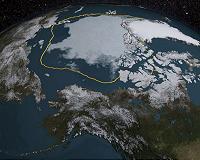
Arctic and major fishing nations, including China, announced Friday that they have agreed to a moratorium on commercial fishing in Arctic waters before a fishery in the icy region is even feasible.
The far north is warming at nearly twice the global average rate, causing changes in the size and distribution of fish stocks that may become more attractive to fishers in the medium to long term.
Canadian Fisheries Minister Dominic Leblanc said Canada, together with the European Union, China, Denmark — for Greenland and the Faroe Islands — Iceland, Japan, South Korea, Norway, Russia and the United States agreed "that no commercial fishing will take place in the high seas portion of the central Arctic Ocean while we gain a better understanding of the area's ecosystems."
They also agreed that before any fishing takes places, they must establish "appropriate conservation and management measures."
To that end, the parties committed to conducting joint scientific research and monitoring to try to better understand Arctic Ocean ecosystems and whether the region can support commercial fisheries in the future.
Karmenu Vella, EU Commissioner for the Environment, Fisheries and Maritime Affairs, called the legally binding agreement "historic."
"It will fill an important gap in the international ocean governance framework and will safeguard fragile marine ecosystems for future generations," he said.
The agreement in principle must still be ratified by all 10 parties.
Greenpeace, praising the deal, said the moratorium is expected to endure for at least the next 16 years, covering an area of 2.8 million square kilometers (one million square miles).
Added Arctic data shows global warming didn't pause
Gaps in Arctic temperature data caused a misperception that global warming slowed from 1998 to 2012, according to a new study in the journal Nature Climate Change.
A University of Alaska Fairbanks professor and his colleagues in China built the first data set of surface temperatures from across the world that significantly improves representation of the Arctic during the "global warming hi … read more
