
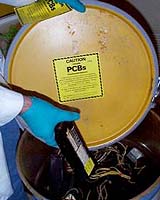
Britain's Environment Agency is launching an inquiry into toxic waste produced by US agrochemical giant Monsanto that was dumped in British landfills, The Guardian reported on Monday. Monsanto, which appeared to blame contractors for the dumping, was aware that chemicals it produced were likely to contaminate wildlife and people, the daily said citing a previously unseen government report which it had read.
The report detailed how 67 different chemicals which could have only been made by Monsanto were leaking from a quarry in Wales that was not authorised to take chemical waste.
"This is one of the most contaminated sites in Wales and it is a priority to remediate because it is so close to habitations," John Harrison, a regional manager at the Environment Agency, told The Guardian.
"Our legal team is gathering all the evidence and we are trying to apportion costs."
According to the newspaper, the new information is mostly based on court papers filed in the United States, and internal Monsanto documents.
The papers detail how Monsanto was aware, as early as 1965, that the chemicals being dumped were accumulating in fish and seafood, wildlife and plants, as well as in human milk.
Despite tests in 1953 of its polychlorinated biphenyls (PCBs), used mostly as flame retardants and insulators, killing half of rats given medium-sized doses, the company continued to manufacture PCBs and dispose of the waste in south Wales until 1977.
Monsanto, which has split into several smaller companies since 1997, said in a statement: "A thorough review … will show that (former parent company) Pharmacia did inform its contractors of the nature of wastes prior to disposal, and that Pharmacia did not dump wastes from its own vehicles."
