
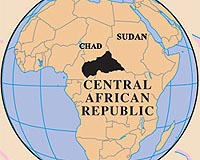
The Central African Republic's government and two rebel groups signed a "comprehensive peace agreement" on Saturday which leaves the door open for a third rebel group to sign on.
The accord, which builds on individual pacts agreed by the government with each rebel movement, was signed in Libreville, Gabon, by CAR's main rebel force, the Popular Army for the Restoration of Democracy (APRD), led by former defence minister Jean-Jacques Demafouth, and Damane Zakaria's UFDR.
A comprehensive agreement uniting the three rebel groups and the government is a precondition for the organisation of a so-called Inclusive Political Dialogue that is to include all parties — the ruling administration, rebels, the legal opposition and civil society.
The opening of the dialogue had been planned for June 8 but was postponed pending the deal between the government and the rebels.
The third rebel force, the Democratic Front (FDPC) led by Abdoulaye Misaine, was represented even though it did not sign. Misaine was in Libya, according to a Gabonese diplomat.
The signing ceremony took place in front of CAR and Gabonese presidents Francois Bozize and Omar Bongo Ondimba.
"It is our belief that from this day forward, inclusive political dialogue will become a reality," said CAR Information Minister Cyriaque Gonda.
"This agreement is a step in the right direction," he added, saying it had been able to include practically all the measures outlined in the previous individual accords.
"In signing up, the parties are showing their willingness to strive towards a definitive peace and resolve the serious problems which have beset CAR for years and which require national dialogue," he added.
CAR, one of the planet's poorest nations, faces a financial crisis as well as insecurity in northern territories, held hostage by rebels, bandits and highwaymen fighting with government troops ever since Bozize's victory in presidential elections in 2005.
The main sticking point of the deal concerned a total amnesty for rebels, with demobilisation and resettlement plans still to be fully ironed out.
While Gonda said that the accord entailed "an amnesty for every fighter, for all activities related to the rebellions," the APRD's Demafouth said the hard bargaining was only now beginning.
"It's (only) after the peace accord that we will see how committed the parties really are to applying the agreement," he said, underlining that a "general amnesty" would likely prove the toughest element in negotiations.
