
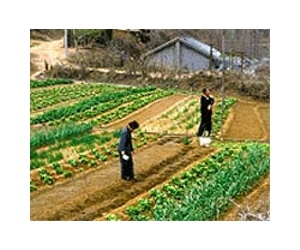
China said on Monday it would boost spending to aid farmers amid rising concern over a growing rural-urban wealth gap and the potential for corresponding unrest.
Senior officials told reporters the fiscal support would include increased subsidies to help farmers produce more crops and also spend more, and making it easier for rural residents to migrate to urban areas.
The government "will certainly increase by a large margin" investment in the agricultural sector this year, said Tang Renjian, deputy director of a top agricultural policy-making body.
The amount of new spending would be unveiled after the session of the National People's Congress, China's parliament, which is scheduled to open next month, he said.
The income of urban residents was about 3.65 times greater than their rural counterparts in 2009, the government said last month, compared to 3.28 times more in 2007.
China's leadership is increasingly worried about the income gap brought about by 30 years of market reforms that have made a few cities very rich, but raised tensions among the 900 million rural residents in the nation's hinterland.
The central government spent 716.1 billion yuan (105 billion dollars) in its vast rural areas in 2009, up by 120 billion yuan from the previous year, Tang said.
The government this year will subsidise the purchase of more types of agricultural machinery and seeds, he said.
Farmers will also be encouraged to build or renovate their homes through a programme that will subsidise the cost of construction materials, he added.
The three-year programme was expected to benefit up to 80 million farmers and boost domestic spending by at least 50 billion yuan, the official China Securities Journal said Sunday.
The government also would aim to improve public infrastructure in the countryside, said Chen Xiwen, director of the rural policy group.
He said the government would strive to give rural residents that same access to quality public services "so as to enable farmers to share the fruits" of China's economic growth.
Chen said the government also would allow more migrant workers to legally migrate to cities as part of efforts to protect their rights to jobs, housing, insurance and children's education.
Currently, it is difficult for migrants to gain permanent residency — and thus access to such services — in other cities.
China had 152 million migrant workers by the end of November.
Share This Article With Planet Earth
