
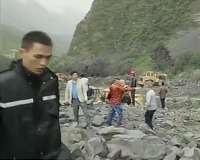
The death toll in a landslide which buried a village in southwest China rose to 36, state broadcaster CCTV said Sunday, with 15 still missing days after the disaster struck.
The state-run People's Daily said rescue work is ongoing at the site in Shuicheng county, Guizhou province, where a thick torrent of mud buried 22 houses in the landslide on Tuesday.
CCTV broadcast footage of rescue workers trying to reach survivors through a huge mound of earth, and excavators digging through the collapsed hill.
Two children and a mother with a baby were among those dead.
Official news agency Xinhua said Saturday night that 40 people had been rescued from the site, according to the local emergency rescue command.
Xinhua said a local school had been set up as an emergency medical and rescue centre, with "multiple rescue teams and experts" still searching for those missing.
The government has earmarked 30 million yuan ($4.35 million) for search and rescue efforts in the province, Xinhua reported, as well as the relocation of victims.
Landslides are a frequent danger in rural and mountainous parts of China, particularly after heavy rain, and the country has suffered severe flooding this year.
In August 2017 at least 30 people were killed in two separate landslides in the same rural province of Guizhou.
Morocco landslide leaves 15 dead: local officials
Rabat (AFP) July 26, 2019 –
Moroccan emergency crews pulled 15 bodies from the mud after a rare summer downpour triggered a landslide that buried a minibus, authorities said Friday, providing the first official toll.
The victims — eleven women, three men and one child — were found in the bus buried some 20 metres (more than 60 feet) under the masses of earth and rock dislodged by the rain, local authorities said.
"There are no survivors," they said in a statement.
The official toll comes after public broadcaster 2M reported Friday morning that 16 bodies had been recovered.
The bus was buried Wednesday evening when a deluge in the Atlas mountains south of Marrakesh triggered flash flooding.
Images released by the authorities show excavators working to dig a path to the bus, more than 24 hours after it was engulfed by the debris.
A weather alert on Tuesday warned of storms in several provinces in the North African country, which rarely receives summer rains.
Investment in Morocco's road network has largely focused on the main transport arteries and many rural areas can be reached only by dirt tracks that are vulnerable to extreme weather.
Every year, nearly 3,500 people are killed on the North African country's roads.
At least 13 killed in Myanmar jade mine landslide
Yangon (AFP) July 28, 2019 –
At least 13 jade mine workers and security guards in northern Myanmar were killed in a landslide Sunday, authorities said, as rescuers frantically searched for more victims.
Dozens die each year in landslides caused by jade mining, a dangerous and poorly regulated industry in Kachin state between the country's borders with China and India.
Myanmar's fire services department said in a Facebook post the accident happened in the early morning in Hpakant township.
"We have sent two injured men and the dead bodies of 13 men" to a local hospital, the department said.
A police officer on the scene told AFP that the upper part of a mine collapsed and fell around 200 metres (700 feet) onto those sleeping below.
Though new regulations suspend mining during the wet season peak from July through September, some workers stay on site.
Heavy rains pounded the area over the last week, according to the officer, who said the search for those missing is ongoing.
The deadly landslide is the latest to hit Hpakant, the epicentre of a multibillion jade trade fueled by insatiable demand in China.
In April more than 54 people were killed when a massive landslide buried workers along with dozens of vehicles.
Many miners are from impoverished ethnic minority communities who risk their lives hunting the translucent green gemstone.
Drug addiction among workers is also a major problem in Hpakant, which has been turned into a vast moonscape-like terrain by years of mining.
Watchdog Global Witness estimated that the industry was worth some $31 billion in 2014.
But corruption means very little reaches state coffers.
Jade and other abundant natural resources in northern Myanmar including timber, gold and amber have helped finance both sides of a decades-long civil war between ethnic Kachin insurgents and the military.
