
Sending humans to Mars has been a dream of scientists and a large part of the population ever since Nicolaus Copernicus first postulated that it was a planet, about 500 years ago. Even before that first Soviet satellite, Sputnik 1, was sent into orbit 60 years ago, a mission to Mars has been the subject of many science fiction articles and books.
Over the past half-century technological advances have just about overtaken the fictional aspects of getting to Mars. Each year we get closer and closer to actually assembling a real system that can carry people to the "Red Planet."
Today, several government and private organizations are seriously developing plans to send astronauts toward the planet. In fact, there are multiple interesting approaches to such a mission.
One of these approaches had been proposed by Inspiration Mars Foundation, a nonprofit that hoped to send a married couple on a flyby of the planet. The foundation was founded by Dennis Tito in 2013, when he suggested that the flight would take place in 2018.
However, experts have concluded that the financial, systems and life support challenges make this time table highly unrealistic. Even without touching down on the planet, the mission would take roughly 500 days and a direct return to Earth would require an atmospheric entry speed of about 13.9 km/sec, which is well above any previous entry speed. It appears that this plan will not be successful even though the idea has created a good deal of interest.
Another organization, known as Mars One, is a Dutch nonprofit that wants to establish a permanent Mars colony. The initial mission would involve landing four astronauts on Mars' surface at an estimated cost of $6 billion.
The group hopes to fund the venture by staging a global media event that highlights every aspect of the mission from astronaut selection to planetary surface activities. It is important to note that no one will return to Earth, but Mars One intends to launch additional settlers every two years. Even with this constraint, more than 200,000 people have applied.
Elon Musk, of SpaceX and Tesla, is thinking of colonizing Mars and making humans a multiplanet species. In late 2012, he announced ideas addressing how to make it happen. Mr. Musk proposes launching colonists to Mars on board a huge, reusable launch vehicle using liquid oxygen and methane.
Each settler in a small initial group of about 10 would be charged $500,000. Eventually, he envisions a self-sustaining settlement with as many as 80,000 settlers. Mr. Musk appears to be serious about this program, as SpaceX is already working on several preliminary aspects of the concept.
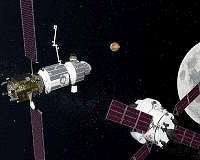
NASA is also looking to Mars. Getting astronauts to the Red Planet is the primary long-term goal of the Space Agency's human spaceflight program. Near-term plans include sending humans back to the Moon and to the vicinity of other celestial objects. This would be followed by astronauts eventually landing on the Martian surface for both scientific and exploration purposes.
All of these efforts are ambitious, very expensive and hazardous to the travelers. Nevertheless, it seems clear that humanity will find a way to Mars and beyond.
