
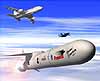
Washington, DC Dec. 11, 1997 – The U.S. Federal Aviation Administration has suspended Orbital Sciences Corp.'s launch license for this week-end's Pegasus XL launch of eight of the company's ORBCOMM satellites.
The move, by the FAA's Associate Administrator for Commercial Space, marks the first time in the history of commercial space licensing that a lift-off has been stopped. The U.S. government began issuing licenses to rockets more than a decade ago.
The issue revolves around the ability of the fourth stage of the OSC
Pegasus winged booster to vent any hydrazine fuel that might remain on
board the rocket after its has fired.
Sources in the FAA tell SpaceCast the original license issued to OSC contained relief equipment to purge the rocket stage of excess fuels after shutdown and separation of the satellite payloads.
The system is believed to be essential to avoid pressure building
up in the nearly empty stage and causing an on-orbit explosion. Such
explosions are believed to be a major contributing cause of the creation of
orbital debris, or space junk.
But the FAA found out that in the final configuration of the rocket's 4th stage, as is installed now awaiting launch from Vandenberg Air Base in California, the venting equipment was omitted.
Lift-off was originally planned for today, but has been pushed back to Saturday, weather permitting, pending resolution of the issue. The
FAA has required OSC to file an amended launch plan with possible new
provisions for the venting of the fuel. A final decision as to whether OSC
can proceed to launch Pegasus will be made late Thursday, space industry
sources say.
