
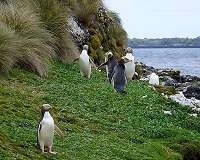
New research details the threat posed to New Zealand's hoiho, or yellow-eyed penguin, by fishing nets. Scientists at the University of Otago argue the problem warrants immediate government action.
Researchers conducted a review of the human threats facing the iconic penguin species. They found set nets, or gillnets, kill the most yellow-eyed penguins each year.
Some 330 commercial fishing boats deploy the walls of thin, nylon nets in the waters surrounding New Zealand.
"Diving birds like penguins are unable to see the fine mesh underwater, and become entangled and drown," Dr. Ursula Ellenberg said in a news release.
During the last two decades, the hoiho population has declined 76 percent. Only 246 breeding pairs remain on New Zealand's South Island.
On land, local groups have worked hard to protect the species but the threats at sea remain insufficiently regulated, researchers say.
Though warming seas and disease continue to put pressure on the penguins, human activity remains the gravest threat.
"Whereas there is no quick fix for climate change or marine habitat degradation, there is one thing we can do immediately to improve their chances of survival," Ellenberg said. "We can stop drowning them in set nets."
Only 3 percent of fishing boats are monitored by preservers. According to the available data, 35 yellow-eyed penguins were caught and killed in set nets last year. But researchers believe the real total is likely higher.
Scientists suggest cameras could be used to monitor bycatch on fishing vessels. Stronger regulations of set net use in areas where penguins forage could also prevent penguin deaths.
"Setting the nets at night can considerably reduce the bycatch of penguins since these are visual hunters and mostly forage during daylight hours," Ellenberg said.
Researchers published their review of the yellow-eyed penguins this week in the journal Endangered Species Research.
Scientists discover resilient 'heart' of Great Barrier Reef
Australia's Great Barrier Reef is in peril from climate change and widespread bleaching, but scientists said Tuesday a small portion may be resilient enough to keep much of the rest alive.
About three percent of the World Heritage site – home to the planet's largest collection of coral reefs with 3,800 in all – has so far emerged relatively unscathed from a host of threats, from warming wa … read more
