
Among various kinds of electrode materials for supercapacitors, carbon-based materials are most commonly used because of their commercially available and cheap, and they can be produced with large specific surface area.
Heteroatom doping, especially dual-doped carbon materials have attracted much attention for the past few years, and have been regarded as one of the most efficient strategies to enhance the capacitance behavior of porous carbon materials.
However, most of the preparations of co-doped carbon materials involve high temperature treatment and post-processing of doping procedures. Therefore, it is necessary to develop a concise route for large-scale production of dual-doped carbon with desirable morphology and structure, and meanwhile, to achieve high content of doping.
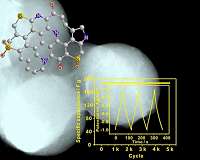
In an article published in Science Bulletin, Prof. Deli Wang's research group describe a facile two-step synthetic route was developed to fabricate N/S co-doped carbon microsphere (NSCM) by merely using thiourea as dopant.
The N/S doping content is controlled via varying the carbonization temperature. It has been proved that a suitable quantity of N and S groups can not only provide pseudo-capacitance but also promote the electron transfer for carbon materials, which ensures the further utilization of the exposed surfaces for charge storage.
The optimized NSCM prepared at a carbonization temperature of 800 oC (NSCM-800) achieves a high capacitance of 277.1 F g-1 at a current density of 0.3 A g-1, and a high capacitance retention of 98.2% after 5000 cycles.
Since the precursors used in this strategy are glucose and thiourea, which are both inexpensive and widely used, the production of high doping content of co-doped carbon materials can be easily scaled-up for practical applications of supercapacitors in light of the very simple reaction processes involved.
A room temperature field-effect transistor using graphene's electron spin
Graphene Flagship researchers based at Chalmers University of Technology in Gothenburg, Sweden have published in Nature Communications a research paper showing a graphene-based spin field-effect transistor operating at room temperature.
Using the spin of the electrons in graphene and other layered material heterostructures the researchers have produced working devices as a step towards int … read more
