
A ballerina gracefully dances on a small stage. She is followed not by a male partner, but by a robotic arm manipulator that seems to sense her every move. For NASA Goddard technologist Vladimir Lumelsky, the performance shows the future of robotics.
It also demonstrates an advanced technology that Lumelsky hopes to develop as part of the push from NASA's Goddard Space Flight Center to develop niche robotics capabilities critical for carrying out the Vision for Space Exploration.
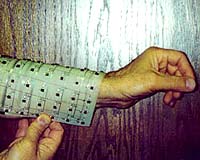
Lumelsky, until recently a professor at the University of Wisconsin-Madison, has begun setting up a laboratory at Goddard to develop a high-tech covering that would enable robots to sense their environment and react to it, much like humans respond when something or someone touches their skin.
Such a technology, which he refers to as a "High-Tech Skin," is essential for carrying out the Vision for Space Exploration because the Vision depends heavily on humans and robots working together under a variety of working conditions, many of them highly unstructured, Lumelsky said.
"Robots move well on their own, especially when nothing is in the way," Lumelsky explained. However, change the environment and a different picture emerges. "Robots should be able to react, but today's robots can't," he said. "That's the difference and that's got to change for exploration."
Touch Sensing Remains Key
Although great headway is being made in the area of computer vision, vision isn¿t enough, he said. "Humans can survive without sight, but they can¿t survive without tactile sensing. The skin is the biggest organ in our body. It's nothing more than a huge sensor."
Use of Infrared Sensors
