
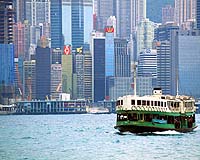
Hong Kong's leader Donald Tsang Monday pledged to tackle the city's worsening air pollution and urged the public to do its bit in the clean-up. Tsang said the government had done much to clean up the air but acknowledged more needed to be done.
He urged citizens to reduce demands on polluting power stations by cutting their electricity usage.
"If we have the public's participation we will get double the results with half the effort," he told legislators in a question and answer session.
Tsang said power stations were the major source of pollution in the southern Chinese territory, with sulphur dioxide emissions accounting for 92 percent of all pollutants.
Citizens could make a difference by raising the thermostats on their air conditioners by three degrees to 25.5 degrees Celsius (77.9 Fahrenheit), a measure which local green activists have been trying to promote.
Tsang said this would save one billion units of electricity a year, save 900 million Hong Kong dollars (115 million US) in electricity tariffs and cut 700,000 tonnes of carbon dioxide.
"Improving air quality requires the whole community's participation," he said.
The environmental protection department will begin a series of public education forums from the end of this month to encourage people and businesses to help clean the air, he said.
Tsang also said the government will endorse the "Clean Air Charter", a campaign so far signed by 300 organisations and companies who have committed to reduce air pollution.
The Hong Kong General Chamber of Commerce praised the announcement.
"This gives a tremendous boost to our clean air efforts. The general public, business and tourists are growing increasingly worried about Hong Kong's air quality," said chairman David Eldon.
"Besides posing a grave threat to our health and economy, air pollution also threatens to choke Hong Kong's competitiveness in the long run."
Daily inundation of choking smog — produced in large part by the factories, vehicles and power stations of neighbouring southern China's heavily industrialised Pearl River Delta region — have gravely reduced the number of clean air days in Hong Kong.
Recent surveys suggest the smog has begun to harm the economy. Tour operators say one in 10 tourists falls ill with pollution-linked respiratory ailments and business groups say fear of smog-caused illness is deterring expatriates from relocating here.
