
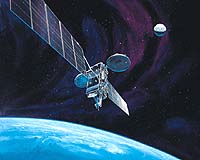
International satellite communications organizations Intersputnik, set up in 1971 with headquarters in Moscow, will set up a joint venture for producing, launching and operating small telecoms satellites, as well as providing a wide range of satellite communications.
Last Tuesday (Sept 26) at the fourth Satellite Communications 2000 conference in Moscow, Intersputnik representative Josef Dolecky said the project had a working title of Intersputnik-100M. The project based on an alliance with a foreign company is to produce up to 100 small satellites with six-10 transponders for use in geostationary orbit.
According to Dolecky, to begin with the cost of a satellite will be $35-45 million, the cost will later fall to $25-35 million. The satellite launches will be made using converted ballistic rockets. The cost of a launch with these rockets will be $10-15 million.
Small satellites can be used to provide a wide range of services, particularly data transmission, Internet traffic, video conferencing, and other telecoms services.
In five to seven years, Intersputnik expects to be using three large LMI-1 satellites, five medium Ekspress-A and up to 100 small satellites of the Insterputnik-100M design, located in 13 orbital positions.
Intersputnik will offer its reserved geostationary positions, joint production and launch of the satellites, and joint operating and marketing as its contribution to the JV.
Intersputnik has 24 member countries and 100 state and private company users. Its system is based on long-term leasing from state-owned Space Communications, Ekspress and Gorizont satellites, and an agreement with America's Lockheed-Martin, with which the LMI-1 satellite is produced, launched and operated.
Intersputnik's orbital segment currently includes eight leased Gorizont, Ekspress, and Gals satellites and one LMI-1. The terrestrial segment is formed for 70 ground stations around the world owned by government or private organizations.
