
Japan's nuclear safety agency said Thursday there is no need to evacuate a village 40 km (25 miles) from the crippled Fukushima nuclear plant after the UN nuclear watchdog voiced concern.
The International Atomic Energy Agency (IAEA) earlier said radiation levels taken at Iitate, located well outside Japan's 20km exclusion zone from the stricken facility, were above its evacuation level.
But Japan's nuclear safety agency said there was no need for the several thousand people still in the village northwest of the plant to leave.
"The IAEA notice was based on a limited sample and a single reading," agency official Yoshihiro Sugiyama told AFP.
"It had an explanatory note that it is necessary to closely follow the situation. We also acknowledge the need to closely follow the situation.
"But at the moment, we do not have the understanding that it is necessary to evacuate residents there. We think the residents can stay calm."
Authorities later said they would Friday lift restrictions issued earlier on drinking tap water in the village, public broadcaster NHK reported.
Norio Kanno, the mayor of the village, which had a pre-disaster population of 6,000, said he was initially "very worried" about the IAEA warning, NHK reported on its website.
"But the government immediately informed us that there is no immediate harm to human health, so I was relieved," he said.
"Villagers have voiced concern, but the levels of radiation in the tap water and the air are declining. I will carefully monitor them before taking any actions."
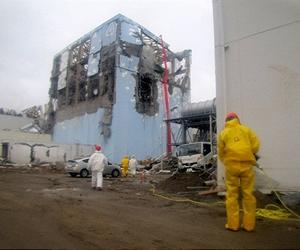
The Fukushima plant was crippled by a tsunami on March 11 and hit by several explosions, leading to frantic efforts to prevent a catastrophic meltdown as radiation has wafted into the air and seeped into the ocean.
Japan has imposed a 20 km exclusion zone around the plant, and also urged people within 30 km to move away.
According to Elena Buglova, head of the IAEA's Incident and Emergency Centre, the reading in Iitate village was 2 megabecquerels per square metre.
That was a "ratio about two times higher than levels" at which the agency recommends evacuations, she said.
Share This Article With Planet Earth
