
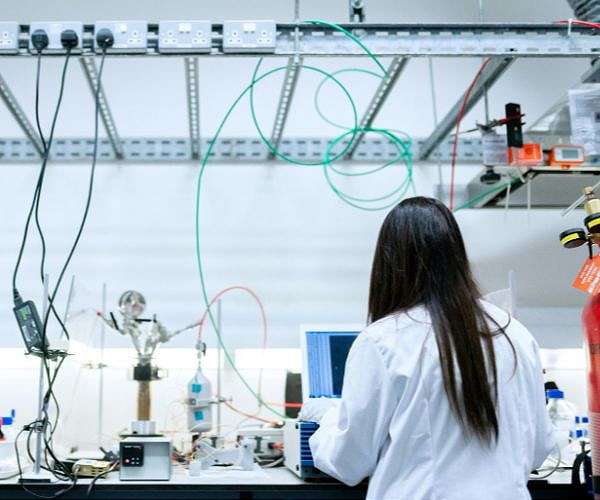
Science never stands still. Research progresses, and new tools and concepts come into being. Today's labs are changing. And they are no longer just people who are researching, or being researched. Machines are taking over. Automation is defining the next generation of research spaces. Fully autonomous labs are more than conceptual systems. And they soon might be the new normal.
Work Smarter and Faster
Labs need to be able to keep up with the increasing demand. Complex questions come with tight deadlines. Everything is slowed down by manual labor. Mistakes can ruin progress. That's why many labs are adopting cutting-edge systems.
Some have turned to cell line development platforms to help execute critical functions. These platforms aid in steps such as cell identification, cloning and quality control. They are predictable and minimize delays. Machines work with precision. They suffer no lapses, make no blunders.
It is also scientists, not the general public, who still direct the research. But bots take care of the repetition. It gives people time to think and reduces the amount of routine work they must do.
Reimagining the Science Classroom
Autonomous labs are different from the old-fashioned kind. There are fewer tools laying all over benches. In their place, you have robotics and intelligent systems. These machines process workflows from beginning to end. The series is computer controlled. It logs/tracks everything you do.
Sensors monitor every footfall. They gauge temperature, movement and timing. Nothing is left to chance. The whole operation works better and is more trustworthy.
This setup is a space that is a working with itself. Each tool is connected to another. Data is passed from step to step. There are no holes or missing info. The lab metastasizes into one giant system.
Continuous Use for Optimal Effectiveness
Human workers have limits. They need rest. They work in shifts. Conventional labs close at night or on weekends. This creates holes in progress. Work gets pushed back.
Autonomous labs do not stop. Machines run 24 hours a day. There is no queue for the trials to begin, the experiments are ongoing. Projects go faster from set-up to results.
This kind of around-the-clock researching begets more output. And it makes better use of lab space. Many tasks can be accomplished using just one system. No more staff or additional rooms are needed.
Less Strain on Researchers
Laboratory work can be tough on people. Fatigue is caused by hours and hours of doing something over and over. Innocuous errors amount to hours and dollars wasted. Morale can take a hit when work is boring or stressful.
Automation offers relief. Machines replace repetitive tasks. They pipette, mix, and measure. It frees people up to concentrate on big ideas and strategy.
This shift is relaxing. It's also more fun to work. It's a return to what scientists love – solving problems and innovating.
Data is at the Heart of Every Stage
Independent labs produce a lot of data. All actions and consequences are logged in real-time. This allows to track every step.
With that much data, researchers can find patterns. They know what's effective and what's not. Mistakes are easy to spot. Success is easier to repeat.
This depth of understanding creates trust. Teams know precisely how results were achieved. They can make smarter, fact-based decisions. Over time, the system learns. It also gets better with feedback and history.
Remote Access and the Global Team
Decentralized labs represent new ways to collaborate. They don't have to be in the same room. They can control experiments from the other side of the globe. With the right tools, teams stay connected and in the know.
This makes teamwork easier. Men and women in distant areas can work together. They transmit ideas and results in real time. Progress moves more swiftly and more flexibly.
Remote accessibility also saves time and money. We do not have to travel constantly. Experts can direct research without ever having to leave their home institution.
Clean, Safe, and Controlled
Machines-using labs are cleaner. Robots don't track in dirt or germs. They don't have to eat, or sneeze or spill. This protects your samples and also gives a clear result.
Safety also improves. Staff face fewer hazards. Machines deal with hazardous chemicals and dangerous steps. And people watch from afar and keep watch on the process.
This makes for a better working place. Fewer injuries happen. Less accidents provide for more time to research others. Teams feel safer and are more confident.
A New Set of Skills
As labs are increasingly automated, so too does the skill set that is required. Scientists still need science. But they must also have a clear grasp of how machines function.
Schools will need to adapt. Training courses have to combine science and technology. Instead students should be taught to work with platforms, rather than test tubes.
New roles will appear. Some will be tending systems, repairing hardware and making sense out of data. It will shape research from the wings. The lab is more of a virtual space.
Conclusion
The future of the lab is not far off. Fully automated spaces are already in the works. They vow faster progress, fewer mistakes and better data. They change how we research.
Whether it's in cell line development platforms or fully integrated systems, machines are officially part of the lab team. They support human work. They create things that are possible but slow or too complex.
Researchers need to be ready for the change. It offers new tools and new ways to think. But the goal is the same. Science moves forward. The lab of the future gets it there faster.
