
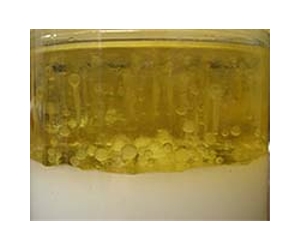
Glycos Biotechnologies has created the first ever microbial platform for the efficient synthesis of biofuels and biochemicals from fatty acids. This revolutionary advancement builds on GlycosBio's microorganism platform and further diversifies the set of feedstocks and co-products the company offers enabling greater cost savings and product flexibility for producers.
This research was done in collaboration with GlycosBio's Scientific Advisory Board Chairman Prof. Ramon Gonzalez, Ph.D, P.E. and his group at Rice University. The results were recently published in the latest edition of Applied and Environmental Microbiology.
To-date cellulosic sugars from edible crops such as sugarcane, sugar beet, corn and sorghum have been used as the primary feedstock in the biological production of renewable fuels and chemicals. Concern over the sustainability of cellulosic sugars for biofuel and biochemical production has caused the industry to look for alternative feedstock sources.
While nonedible cellulosic sugars have been proposed as an alternative, the availability of fatty acid-rich feedstocks and recent progress in the development of oil-accumulating organisms have made fatty acids an attractive option.
"Until now, microbial platforms to enable the biological production of fuels and chemicals from fatty acids have been nearly non-existent," said Paul Campbell, Ph.D, Chief Science Officer for Glycos Biotechnologies.
"Through our research, we were able to prove the effectiveness of fatty acids to produce higher value chemicals and at very high yields with an empirical ethanol yield double that which is usually achieved with sugars. These results demonstrate that fatty acids can be a great alternative to cellulosic sugars."
By leveraging GlycosBio's unique microbial conversion process, researchers were able to metabolically engineer native and heterologous fermentative pathways to function in E. coli under aerobic conditions. This process created the industry's first respiro-fermentative metabolic mode for the efficient catabolism of fatty acids and the synthesis of fuels and chemicals in E. coli.
Based on this discovery, the team of researchers was able to successfully synthesize biofuels including ethanol and butanol, and biochemicals including acetate, acetone, isopropanol, succinate and propionate from fatty acids. Like ethanol, all of these chemicals show excellent yield advantages over the comparable sugar-based fermentation processes.
"At GlycosBio, we've been able to uniquely optimize the biochemical production of fuels and chemicals from microbial strains enabling a very flexible platform that can support a wide range of industrial and agricultural feedstocks," said Walter Burnap, President and Chief Financial Officer for Glycos Biotechnologies.
"Edible oil-rich crops such as rapeseed, sunflower, soybean, and palm are widely available and non-edible fatty acid-rich crops along with industrial by-products are receiving more attention as longer-term alternatives. With this research complete, the industry can begin to realize the advantage of and choose a fatty acid approach to biofuel and biochemical production.
"For GlycosBio, this research further supports our ability and opportunity to work with oleochemical and biodiesel producers who generate glycerol and fatty acid wastes."
Share This Article With Planet Earth
