
Feeling queasy about an upcoming colonoscopy exam? Patients can take some solace in the fact that such procedures have become so much easier than in the recent past, and may become nearly effortless in coming years. Planners at Sumita Optical Glass Inc. see endless possibilities ahead. The firm develops a line of B2B products utilizing advanced lens designs that have helped to dramatically reduce the pain and trauma of modern surgery.
The key device in the firm's sphere of influence has been the endoscope, which uses tiny lenses to capture internal body cavity images. After the endoscope is introduced via a small skin perforation, a charge-coupled device (CCD) transmits the images electronically for display on a video monitor for doctors to see.
Since their adoption in 1992, endoscopes have helped immensely with the evolution of non-invasive upper and lower intestinal tract exams. Since then, the field has experienced a spectacular run that has revolutionized surgical technique; today, small-caliber flexible endoscopes with attached cutting tools are used to examine and perform surgery in almost any part of the body while incurring minimal scarring.
Sumita makes lenses as small as 2.2mm in a range of shapes, from aspheric to super-wide angle designs.
"The 'minimal invasiveness' issue is obviously a huge benefit in medicine, since surgery recovery times had traditionally been a major issue," says Sumita's Takayuki Ishibashi, on hand at the International Laser and Photonics Expo held in April in Tokyo. "But frankly, endoscopes are just beginning to make an impact. New uses are constantly being found."
The field of endoscopy has both exploded and segmented to include laparoscopy, gastrointestinal endoscopy, arthroscopy, obstetrics/gynecological endoscopy, urology endoscopy, bronchoscopy, mediastinoscopy, otoscopy, and laryngoscopy.
The global endoscopy equipment market is expected to grow to $33.6 billion by 2020 from $23.8 billion in 2015, a compound annual growth rate of 6.1%, according to research site Markets and Markets. While North America currently accounts for the largest share of the market, followed by Europe, Asia-Pacific is seen growing at the highest rate while serving as a revenue pocket for companies offering endoscopy equipment. Japanese firms Olympus, Fujifilm, and Pentax Medical Corp. rank among the global players.
Going forward, the contributions of endoscopy to medical science are likely to be even more meaningful, while progress in miniaturization is allowing for the development of smaller and smaller lenses. Robot-assisted endoscopes are already in use. Mini-laparoscopic surgery features instruments as small as 2.3mm to 3.5mm in size. And new cameras developed in the Netherlands allow surgeons to look inside blood vessels.
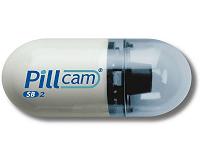
Meanwhile "capsule endoscopy" continues to make strides. Patients swallow a video capsule containing a tiny light bulb, battery, and radio transmitter which takes photos of the inside of the esophagus, stomach, and small intestine as it passes through the body. The pictures are beamed to a small receiver worn the patient's waist and then downloaded for diagnosis. Hours later, the capsule is passed by the patient into the toilet and flushed away.
Israel-based Given Imaging, which controls about 85% of the capsule endoscope market, has seen its vitamin-sized PillCam administered over 1.5 million times thus far. The Olympus Endocapsule 10 features 3D tracking, and can automatically flag images needing closer inspection as well as indicate exactly where images were taken to determine the location of any abnormalities.
"Imaging devices will certainly continue to decrease in size, such that 'microendoscopy' will be feasible in the near future," says Ricardo A. Natalin at online research site Medscape, adding that endoscopy of any luminal structure, including the vas deferens, will certainly follow.
Indeed, progress may not slow down until nanotechnology finally arrives, say many experts.
"A time when tiny robots patrol biologic structures to constantly survey and help protect normal anatomy and physiology is not difficult to imagine," says Mr. Natalin.
