
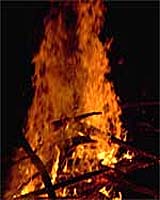
Estonians will miss their traditional midsummer bonfires in state-owned forests this year after the authorities on Tuesday banned the practice because of risk of forest fires. "The current extremely dry grass in the forests would light up from just a spark," said Marge Rammo of the forestry centre.
Midsummer's Eve on June 23 and St John's Day on June 24 are the most popular holidays on the Estonian calendar. On the longest day of the year, the summer equinox, Estonians like to gather in the countryside to sing, dance and jump across the licking flames of a bonfire.
"Due to the extreme danger of forest fires, the Estonian state forest management centre bans making bonfires in all state-owned forests, including in areas specially designated for bonfires," the forestry centre said in a statement.
"We have never had to issue such a blanket ban before," said Rammo. "We apologise to anyone who had made plans to make a Midsummer's Eve bonfire in the recreation sites of the state forests."
The state owns 40 percent of Estonian forests, in which a wide network of recreation areas for hikers and holidaymakers is maintained.
"The ban will remain in force indefinitely, but we hope to lift is as soon as we get rain," Rammo said.
The weather in the heavily forested Baltic country has been exceptionally dry in the past few weeks, and Estonian rescue workers are battling to put out several firest fires.
Prosecutors have launched a criminal investigation into the cause of one fire raging over 800 hectares (around 2,000 acres) in the Kuusalu district, 50 kilometres (30 miles) east of the capital Tallinn.
Anyone who violates the ban on bonfires in a state-owned forest is liable to arrest or a fine of 12,000 kroons (770 euros, 940 dollars).
