
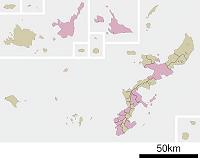
Pristine beaches, superior scuba-diving, and world-class awamori sake (rice wine) have always been good reasons to visit Okinawa. Setting up a business might also be an idea. Okinawa is getting the jump on free trade, and not a moment too soon. Japan's southernmost prefecture has traditionally ranked among the bottom third in national economic rankings – including per capita income and gross domestic product (GDP) – but the local government is nevertheless determined to turn the ship around.
Beginning in 2014, Naha, the island's capital, has stepped up the creation of free trade zone areas in order to stimulate the local economy and provide jobs to its young work force. In contrast to the national population decline, which currently runs in excess of 3% per year, Okinawa's population growth, at 1.73% per annum, is actually the highest in the country.
The Uruma Okinawa District International Trade and Industrial Cluster Region, a designated special economic zone located northeast of the capital on reclaimed land, sports a number of amenities, including an introductory 40% reduction in the corporate income tax, and subsidies to offset the costs of plant leasing, real estate, and construction.
Over a dozen other industrial development sites dot the island.
The barriers to getting into the Uruma site do not seem inordinately burdensome: applicants must be a corporation, engage in trade or trade related business, and must have a financing plan with a viable business plan.
"It's an aggressive effort, to be sure, but we've managed to attract 56 companies in the last three years, so it's a start," says Shikatsu Touma of the prefecture's Department of Commerce, Industry and Labor. "The high unemployment rate remains a problem, since the local economy is not strong enough to keep pace with the population."
Okinawa's jobless rate consistently underperforms the national average, and currently exceeds 5% versus about 3.0% for the country as a whole. The prefecture lacks primary manufacturing industries due to its small market and long distance from the mainland. The agricultural share of labor is also small (4.5%), with sugar cane, beef and pork production functioning as the main pillars.
The bane – and the boon – for many Okinawans is the large U.S. military presence on the island. In 2011, the U.S. armed forces employed over 9,800 Japanese workers in Okinawa, and accounted for up to 5% of the economy. But they also occupied a quarter of the island's land area.
The Tokyo government pays the prefecture around 10 billion yen per year in compensation for the American presence. But this comes at a price. Numerous sexual assault incidents involving U.S. servicemen have increased local clamor for the Americans to leave. In January 2015, in response to the election of pro-base removal governor Takeshi Onaga, the national government announced that Okinawa's funding would be cut.
"The politics of Okinawa's situation are passionate and complex, as they have been for a long time," says Mr. Touma. "Obviously, what happens with the U.S. bases matters a great deal. But we can still do a lot independently of negotiations between governments, and we need to think pro-actively."
Okinawa, like lower-cost Pacific nations such as the Philippines and Vietnam, offer packages of deals to attract businesses at its economic zones. The prefecture provides facilities for lease, including steel frame one-story buildings, ample access to manufacturing hardware, such as injection mold machines, treatment furnaces, die casting machines, temperature and humidity testing chambers, and CAD/CAM systems. In some cases, Naha will also shoulder a portion of wages paid to local hires taken on long-term.
Geographically, the island is far closer to Taiwan, Hong Kong, and other Chinese trading centers than anywhere else in Japan. Construction is also progressing on a massive new integrated distribution center adjacent to Naha's port.
Perhaps most importantly, time may not be on Okinawa's side. While tourism is booming – it's tripled over the last 30 years – it alone is not enough to sustain the island. And any uncompensated U.S. force reduction/subsidy cut would pose a heavy blow to the region. Meanwhile, the proposed Trans-Pacific Partnership (TPP) trade agreement has many Okinawans worried that a flood of cheap imported goods such as pork, sugar, and corn could crush local industries.
