
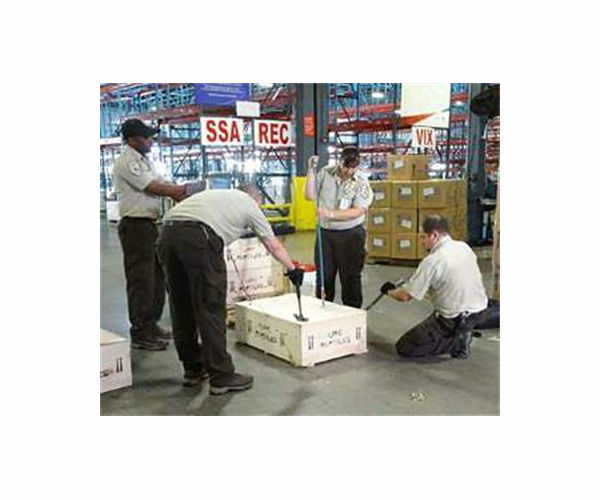
The international pet trade remains significantly under-regulated, and as a result, thousands of reptile species are being exploited.
According to a study published Tuesday in the journal Nature Communications, just 9% of the world's more than 11,000 reptile species are protected by international regulations.
For the study, researchers in Thailand and China expanded upon existing pet trade databases by surveying the activity of thousands of web-based reptile retailers, yielding a comprehensive depiction of the global reptile trade.
Researchers looked at the origin of the most commonly traded species, as well as the their conservation status. Scientists also surveyed reports of wild capture practices in the countries where commonly traded species are found.
"Based on two international trade databases and information scraped from 24,000 web pages in five languages, we found that over 36 percent of reptile species are in trade — totaling almost 4,000 species," researcher Alice Hughes, landscape ecologist with the Xishuangbanna Tropical Botanical Garden of the Chinese Academy of Sciences, said in a news release.
Researchers found more than three-quarters of the reptile species on the international pet market remain unprotected by international trade regulations. Many of the reptiles are endangered — plagued by population declines and habitat losses.
Scientists estimate that 90 percent of species and more than half the individual reptiles involved in the pet trade are being captured from the wild.
Because species are often exploited shortly after scientific description, newly discovered endemic species are especially vulnerable.
"Gaps in monitoring demand a reconsideration of international reptile trade regulations," researchers wrote in their paper. "We suggest reversing the status-quo, requiring proof of sustainability before trade is permitted."
