
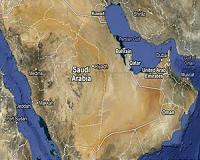
Lingering tensions in the Persian Gulf related to the diplomatic standoff with Qatar is a risk that's been largely ignored, RBC Capital Markets said.
Saudi Arabia earlier this month led a coalition of Middle East countries in severing ties with Qatar, adding a layer of geopolitical risk to the global energy market. Saudi Arabia is the largest oil producer in the Organization of Petroleum Exporting Countries, Qatar is a leading natural gas supplier and the Persian Gulf is a choke point for the flow of energy supplies from the region.
"Given the severity of the standoff, we are no longer able to completely write off a disruption of energy transit routes, the worsening of regional proxy wars, or even some type of confrontation between Saudi Arabia and Iran," the emailed report from the Royal Bank of Canada read.
Saudi Arabia and Iran are historic adversaries. Iran is the only party to a multilateral production deal with room for growth.
This week, the U.S. government emphasized a strategy of energy dominance that U.S. Energy Secretary Rick Perry said meant self-reliance and security from external geopolitical shocks. On the diplomatic front, the report from RBC said Washington's message has so far been mixed, a posture that opens the door for expanded Russian influence in the Middle East.
During a Moscow meeting in May, Russian Energy Minister Alexander Novak said Russian companies tied to exploration and production were eager to establish a footprint in the Saudi market.
On energy markets, the Persian Gulf dust-up has raised questions about unity among OPEC members coordinating to ease the supply-side strains that brought crude oil prices to historic lows last year with managed production declines.
"We have therefore raised our risk ratings in our OPEC watch list for Saudi Arabia, UAE, Iran, and once again Qatar," the report from RBC read.
Turkey urges 'respect of Qatar's rights' to solve Gulf crisis
Istanbul (AFP) June 30, 2017 –
Turkey on Friday said the rights of Qatar must be respected as it hosted the defence minister of Ankara's main Gulf ally which has been left isolated by Saudi-led sanctions.
Khaled bin Mohammed al-Attiyah met with Turkish Defence Minister Fikri Isik at the defence ministry in Ankara, the state-run news agency Anadolu said on Thursday.
The meeting came as Ankara, which has stood by Doha throughout the crisis, resists pressure to shutter a Turkish military base on the emirate that Qatar's neighbours want to see closed.
In the talks, Isik said that "the current issues between the (Gulf) countries, who are brothers, must be resolved soon on the basis of a sincere dialogue and respect for Qatar's rights."
Saudi Arabia, the United Arab Emirates, Egypt and Bahrain announced on June 5 the suspension of political, economic and diplomatic ties with Qatar, accusing it of supporting extremist groups.
Doha denies the claims. Turkish President Recep Tayyip Erdogan has said the allegations are baseless and offered Ankara's full support.
Turkey has provided food and other aid through hundreds of planes and a cargo ship, although Ankara's attempts to mediate between the sides have so far come to nothing.
Crucially, Ankara is also setting up a military base on the emirate that is set to give Turkey a new foothold in the Gulf, sending in a first deployment of two dozen troops.
Last week Riyadh and its allies issued 13 demands to Qatar for resolving the crisis, including the closure of the Turkish military base and the Doha-based broadcaster Al-Jazeera.
Erdogan hit back at the Saudi-led demands, saying the sweeping demands were "against international law" and saying that asking for the withdrawal of Turkish troops was a "disrespect to Turkey."
Yet Ankara has also been careful not to directly criticise Riyadh and previously urged the kingdom to lead attempts to solve the crisis.
US President Donald Trump spoke with Erdogan on Friday by telephone on the crisis, the White House and Turkish presidency said.
Washington: An energy-dominant U.S. is free from external shocks
An energy-dominant United States means the country is self-reliant and isolated from countries that aim to use energy as a weapon, the energy secretary said.
U.S. President Donald Trump is highlighting his energy strategy this week as the Energy Department's independent Energy Information Administration holds its annual conference in the nation's capital.
Earlier this week, White … read more
