
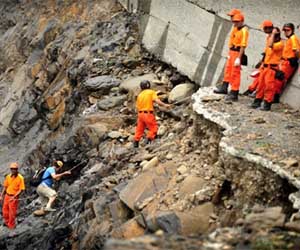
An investigation into deadly mudslides that struck during a typhoon last year found that record rainfall rather than a tunnel project was to blame for the disaster, Taiwanese officials said Monday.
Taiwan's President Ma Ying-jeou ordered the investigation in August after the survivors of mudslides that wiped out a village in the southern county of Kaohsiung blamed a government project for causing damaging erosion.
Villagers from Hsiaolin, where more than 400 people were killed, said dynamite used to carve a 15-kilometre (10-mile) water tunnel from the Laonung River to the Tsengwen Dam triggered the mudslides after Typhoon Morakot struck.
Within 72 hours the typhoon dumped 1,856 millimetres (74.24 inches) of rain on Hsiaolin when it lashed the island in August, said a report released Monday by the Public Construction Commission.
"That amount has surpassed the 1,700 millimetres of rain that a mountainous area could afford (to withstand), therefore leading to the grave disasters," the commission's report said.
It said tremors from the dynamite and the dumping of soil from the construction project in a river were insufficient to trigger the mudslides.
The report revived painful memories of Typhoon Morakot, which left more than 700 people dead or missing in Taiwan.
The deaths sparked public outrage over the government's handling of the disaster, plunging Ma into his worst political crisis since taking office in May 2008 and costing premier Liu Chao-shiuan his job.
Share This Article With Planet Earth
