
Leaders from four southern African countries held talks in Botswana on Tuesday to better manage the world's largest concentration of elephants, amid growing concerns over poaching, loss of habitat, and conflict with humans.
Botswana President Mokgweetsi Masisi, whose country has Africa's largest elephant population, told his fellow leaders that it was time the region comes up with a common strategy to manage the huge mammals.
"We cannot continue to be spectators while others debate and take decisions about our elephants," Masisi said in opening remarks in the northern town of Kasane.
The so-called elephant summit was attended by presidents from Botswana, Namibia, Zambia and Zimbabwe.
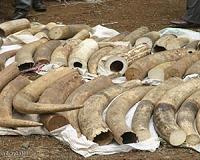
At the end of the one-day meeting, the leaders resolved to "effectively lobby the international community" to relax the global ban on ivory trade to a strictly-controlled form of trade.
In 1989 the Convention on International Trade in Endangered Species (CITES) banned international trade in ivory by listing all African elephant populations in its appendix 1.
Southern African countries have submitted proposals to CITES to have their elephant populations transferred from appendix 1 to appendix 2 which would allow them to trade in registered raw ivory to CITES-approved partners.
"We reflected on the status of the African elephants in the Kavango-Zambezi Transfrontier Conservation Area, and noted that while overall numbers have declined, it is evident from available data that countries such as Botswana and Zimbabwe have large populations," they said in a statement.
As the "numbers continue to grow, human-elephant conflict is escalating ….due to competition for limited resources and the effects of climate change," they said.
Landlocked Botswana has around 150,000 elephants roaming freely in its unfenced parks and wide open spaces, followed by Zimbabwe with some 100,000 according to a conference document.
The southern African region is also experiencing drought spells, which Masisi said were "placing even more pressure on our fragile ecosystems".
Around two-thirds of the world's elephant population is found on the continent.
Over the past decade, the number of elephants on the continent has fallen by around 111,000 to 415,000, largely due to poaching for ivory, according to figures from the International Union for Conservation of Nature (IUCN).
Ivory from elephant tusks is illegally traded as part of a multi-billion dollar industry that extends from Africa to Asia and beyond.
The Botswana government is lobbying to end a strict ban on wildlife hunting which was imposed five years ago to protect wildlife in the country.
The controversial proposals, which must be debated by cabinet before becoming law, would overturn a hunting ban that was introduced by former president Ian Khama, who was an ardent conservationist.
UK soldier on anti-poaching mission killed by elephant
London (AFP) May 7, 2019 –
A British soldier serving in Malawi with an anti-poaching operation has been killed by an elephant, the defence ministry said Tuesday.
Mathew Talbot was on patrol Sunday in Liwonde National Park when "he was killed by an elephant," a spokesman told AFP.
The Director of Malawi's Department of National Parks and Wildlife Brighton Kumchedwa said that "two British soldiers and three Malawian wildlife rangers were out on a normal patrol where they came across three elephants.
"One of the elephants charged and the team tried to run for cover."
According to Kumchedwa, the elephant pulled Talbot from a tree he had climbed and trampled on him.
"His friends tried to resuscitate him but it was all in vain because he died before they could take him to hospital," he said.
Defence Secretary Penny Mordaunt said in a statement that the tragic incident was a "reminder of the danger our military faces as they protect some of the world's most endangered species."
The presence of well-equipped British forces in the 530-square-kilometre (250 square mile) Liwonde park has reassured rangers who routinely confront gangs of poachers armed with assault rifles.
Prince Harry, who visited the park in 2016, is the public face of the anti-poaching project that began that year.
Talbot's commanding officer Ed Launders said he was "determined and big-hearted" and had volunteered for the Malawi mission.
"He was hugely proud of his work as a counter-poaching operator and tragically died doing great good," Launders said.
Talbot enlisted in 2013 and last year attended a multi-national training exercise in Kenya.
Benson Linje, a communications officer at the British High Commission in the capital Lilongwe, told AFP that Talbot's body would be repatriated to the United Kingdom by the end of the week.
