
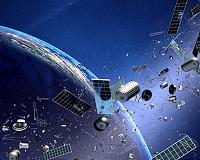
Soon, another 10,000 new satellites will be launched into the most congested space in the universe. There are already an estimated 100 trillion objects in low-earth orbits, most of these things are debris of varying sizes.
However, they have a few things in common. Every orbiting object in the near-earth zone is travelling at speeds in excess of 16,000 MPH. They are all independent and moving in different directions.
There is no physical interaction except in cases of collision. Of the current 1014 objects only about 103 are actively controlled satellites. Very few of these satellites have the ability to leave orbit when they expire.
In addition, every time there is a launch to low orbit there is an upper stage that is left behind in orbit. Now, add all this together and you have a real and permanent traffic jam.
The government is about to impose, for the first time, space traffic management policies on the satellite industry. The initial result will be shock and angst among all satellite operators.
Once we have a policy, next comes a set of regulations. Then there will be government oversight, licensing and enforcement. All this will surely result in higher costs, restrictive orbit selection, additional avionics and mandatory self-removal at end-of-life. In addition, there will be requirements for active satellite separation at all times.
Regulations can apply only to active satellites. But, what about the other 1014 uncontrolled objects that occupy the same space? This is a big problem. No one wants to tackle the debris population.
In fact, no one wants pay for it. If this problem is not addressed, it is conceivable that the government may create a wonderfully controlled space traffic environment in the middle of an unmitigated disaster. So, maybe we should solve the debris problem first.
