
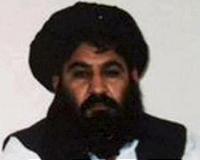
Taliban leader Mullah Akhtar Mansour was killed in a US drone strike because he represented a "specific imminent threat" to US and coalition forces in Afghanistan, the Pentagon said Monday.
"They were specific things that we knew he had engaged in or was preparing to engage in, that were were directly threatening coalition and US forces," said Navy Captain Jeff Davis, a Pentagon spokesman.
US President Barack Obama confirmed Monday that the Afghan Taliban leader was killed Saturday in the drone strike in Pakistan.
The United States and NATO official ended combat operations against the Taliban in December 2014. But their forces are still authorized to carry out "defensive" strikes against Taliban fighters who pose a direct threat to US or coalition troops.
In the Pentagon's view, the operation against Mansour was strictly in keeping with the rules, and not a sign that the United States was re-engaging the group militarily.
"This is not a change in authorities at all, this is us continuing what we've been doing, which is conducting strikes of a defensive nature," Davis said.
Mansour had led the Taliban since last summer's surprise announcement of the death of Mullah Omar, the movement's founder.
Initially considered a proponent of peace talks, Mansour had led the group's biggest military advances since the Taliban's fall from power in Kabul in 2001.
The United States still has about 9,800 troops in Afghanistan, mainly in advisory and support roles with Afghan government forces.
Obama confirms Taliban leader's death in US strike
Hanoi (AFP) May 23, 2016 – President Barack Obama on Monday confirmed Taliban chief Mullah Akhtar Mansour was killed in a US air strike, hailing his death as an "important milestone" in efforts to bring peace to Afghanistan.
Saturday's bombing raid, the first known American assault on a top Afghan Taliban leader on Pakistani soil, marks a major blow to the militant movement, which saw a new resurgence under Mansour.
"We have removed the leader of an organisation that has continued to plot against and unleash attacks on American and Coalition forces, to wage war against the Afghan people, and align itself with extremist groups like Al-Qaeda," the US president said in a statement.
Senior Taliban sources have also confirmed the killing to AFP, adding that a shura (council) is under way to select a new leader.
Obama, who is on a three-day visit to Vietnam, said Mansour had rejected efforts "to seriously engage in peace talks and end the violence that has taken the lives of countless innocent Afghan men, women and children."
He insisted there was no change in US tactics and that troops, who were withdrawn from combat duty in Afghanistan in 2015, would not be going back into the fray.
"On the other hand… it is my responsibility as commander in chief not to stand by, but to make sure we send a strong signal to the Taliban and others that we're going to protect our people. And that's exactly the message that has been sent."
He called on the Taliban's remaining leadership to engage in peace talks as the "only real path" to ending the attritional conflict.
Mansour was elevated to the Taliban leadership in July 2015 following the revelation that the group's founder Mullah Omar had died two years earlier.
Mansour was killed on Saturday near the town of Ahmad Lal, in Pakistan's southwestern Balochistan province, when missiles fired from a drone struck the car he was travelling in.
It was believed to be the first time the United States had targeted a senior Afghan Taliban figure in Pakistan.
Pakistan, which says it is hosting the Afghan Taliban's top leadership in order to exert influence over them, has lambasted the United States over the drone attack, calling it a violation of its sovereignty.
In his statement, Obama said American forces would continue to go after threats on Pakistani soil.
"We will work on shared objectives with Pakistan, where terrorists that threaten all our nations must be denied safe haven," he said.
– Haqqani takeover? –
But the strike could signal a fresh blow for US-Pakistan ties, which have improved markedly in recent years since the killing of Al-Qaeda founder Osama Bin Laden in 2011.
Pakistan's foreign affairs ministry said it had summoned the US ambassador Monday to express concern over the weekend bombing.
A statement said the prime minister's special assistant on foreign affairs Tariq Fatemi had told David Hale that such actions could "adversely impact" the ongoing efforts to facilitate peace talks between the Afghan government and the Taliban.
The US has carried out hundreds of drone strikes in Pakistan, mainly in the tribal regions along the Afghan border, with leaked documents showing Islamabad had quietly consented, despite publicly protesting.
This time however both sides insist Pakistan was informed only after the fact. Leaked diplomatic cables from 2010 had indicated that Islamabad wanted Balochistan, home to a separatist insurgency, to remain off-limits.
The meeting of the Taliban's Supreme Council continued into its second day Monday, according to senior militant sources, though the group has yet to release an official statement.
A senior Taliban source told AFP the killing had sent shockwaves through the leadership and many were lying low in Pakistan while some had fled across the border to Afghanistan.
"The shura meeting is continuing at an undisclosed location, they keep on moving due to the fear of US drone strike," the source told AFP.
Possible contenders to succeed Mansour include the son of Taliban founder Omar, Mullah Yakoub, and Omar's brother Mullah Abdul Manan Akhund.
But it is Sirajuddin Haqqani — leader of the feared Taliban-allied Haqqani network responsible for some of the worst attacks on Afghan and US targets — whose name has popped up most frequently among senior sources.
His appointment could intensify the conflict even further.
"This could be the time Haqqanis will try to take over the whole movement," said Pakistani security analyst Amir Rana.
