
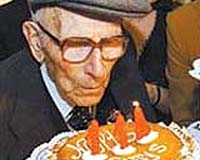
Twenty percent of Americans think they are going to live into their 90s, according to a recent Zogby/UPI poll, even though the average American lives about 77 years. The poll also found about 40 percent of Americans think they will live into their 80s, and more than 5 percent believe they will live past the century mark. More than 65 percent of those polled believed they would live into their 80s and beyond.
The interactive poll compiled data from 10,258 U.S. participants regarding health issues Feb. 9 to 12. The poll has a margin of error of plus or minus 1 percentage point.
"It's an interesting finding, but it's not surprising," said Dr. Ramin Mojtabai, a psychiatrist at Beth Israel Medical Center in New York. "People do tend to have an exacerbated, optimistic view of health. But, it's a good thing because it leads to longer life."
Mojtabai specializes in health psychology, a growing field of study that links preventive medicine, mental health and overall wellbeing. The expectation of living past 77 years may be due to a person's positive perception of health.
Developments in science, as well as new drugs, may also be leading younger adults to increase their expectations of longevity, although there has been no actual increase in healthiness, presenting a sort of "health-related illusion," Mojtabai said.
Fighting this illusion, as well as living longer, takes money and a proactive approach to health, said Don Cosgrove, medical director at the Center for Wellness in La Quinta, Calif.
"Most people (older than) 50 are like a car that has 80,000 miles on it and hasn't had its oil changed regularly," Cosgrove said. "People say to me, 'How can I live longer?' The most important thing they can do is prevent disease," Cosgrove said. If all forms of heart disease, stroke and cancer were eliminated today, Cosgrove estimates life expectancy would be 90.
Most forms of cancer, heart disease and stroke are preventable, Cosgrove said. Screening for these diseases is important, but a person also must be willing to invest in prevention to stave off disease.
For instance, Cosgrove recommends building a "health portfolio," similar to an investment portfolio. "You have to be aggressive and be willing to do things not covered by insurance," he said.
Living past 77 takes management, said Susan Millerisck, a spokesperson for Aetna Healthcare of Hartford, Conn.
"People need to manage their health like they manage their retirement plan," Millerisck said.
The whole idea of managing health is a novel concept to people, Millerisck admitted, but there's no point to retirement without robust health.
Aetna, which has more than 15 million insured consumers, has seen an increase in the number of businesses wanting to include more preventive measures in their employee coverage plans. Health counseling is among the most popular Millerisck said. In addition, 95 percent of Aetna's plans cover preventive cancer screenings — as recommended by federal guidelines — as well as child vaccinations and routine physicals, she said.
"It absolutely makes sense to keep your population healthy," Millerisck said. "You're trying to get people to not develop catastrophic diseases that cost a lot down the road."
Some people are not proactive and do not put the investment into maintaining their health, Cosgrove said.
"I had a rich car dealer come in the other day, he had high blood pressure, plaque buildup and high-blood sugar, but he wasn't willing to spend the money to take himself in for a tune-up," Cosgrove said.
In addition to healthcare access and being proactive with big diseases, diet and exercise are vital to health, said Dr. Pankaj Vashi, a gastroenterologist at the Cancer Treatment Centers of America in Chicago.
For instance, kids born in 2006 may have a shorter life expectancy due to sedentary life styles and obesity, Vashi said.
Eating a variety of vegetables and engaging in physical activity from an early age are the most crucial part of proper diet and exercise, said Bernadette Latson, a licensed dietician and assistant professor at UT-Southwestern Medical Center in Dallas.
"Being physically active wards off diseases better than anything else," Latson said.
Developing good physical activity habits and skills is best instilled in early childhood, Latson said, as it becomes harder to break out of habits with age.
